RF & Wireless Systems · Hardware
Wireless Taxi Call System
Press the button, the taxi is at the door — stand calls without phones or apps.
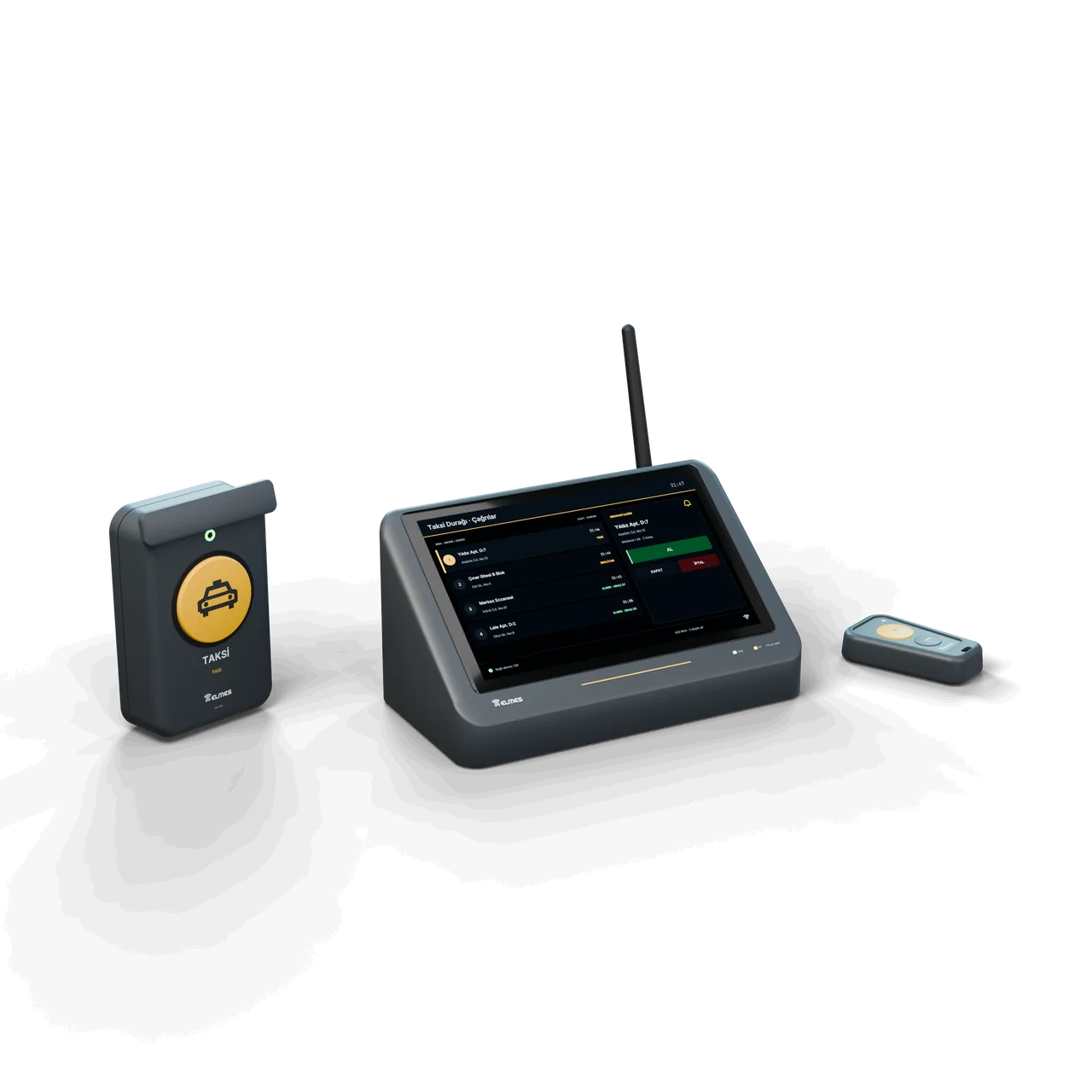
Overview
The problem. Taxi stands take calls from their subscribers (elderly and disabled people, residents of housing estates, shopkeepers) by phone: the line is busy, the number is forgotten, and not every customer has a smartphone or app. Existing wireless button systems work with simple light/sound receivers: you cannot see which subscriber pressed, in what order or how many times; there is no "received" signal from the driver's remote; the devices are old and spare parts are gone.
The solution. When pressed, the battery-powered button in the subscriber's home sends its ID and button number to the stand over RF. The stand receiver shows the subscriber's name/address, the time and the queue on a DWIN touchscreen, and a buzzer sounds. The next driver takes the call from the screen or from their own remote, and the call drops off the list. A web interface (ESP) manages the subscriber list and logs from a browser. With the two-way LoRa profile, an LED on the subscriber's button is intended to confirm the pickup.
Gradual migration. The new stand receiver uses the same RF settings as the subscriber buttons already installed in the field, so stands can switch over without replacing their buttons. In new installations, the LoRa button of the Wireless Call Button Platform provides long range and long battery life.
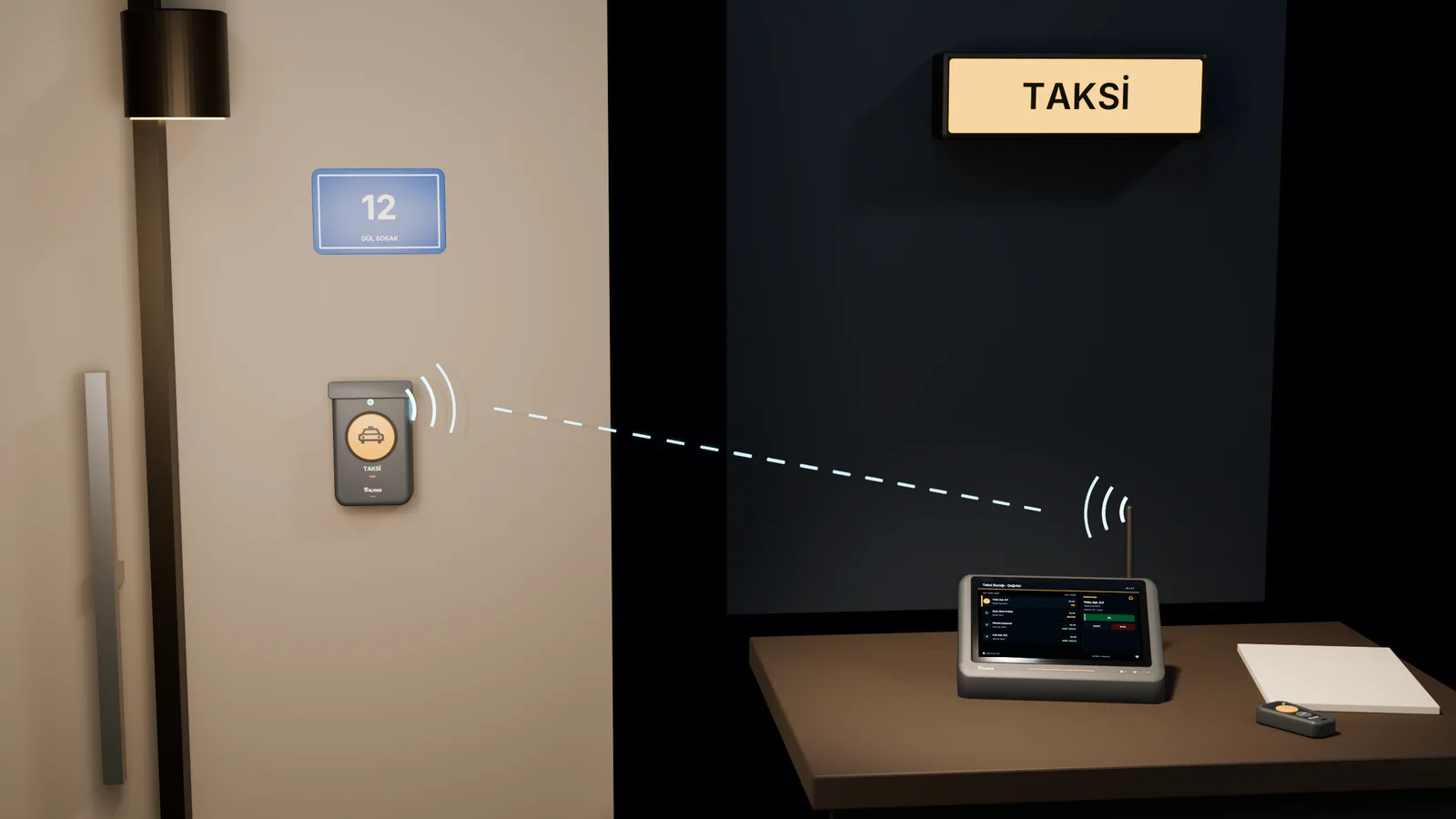
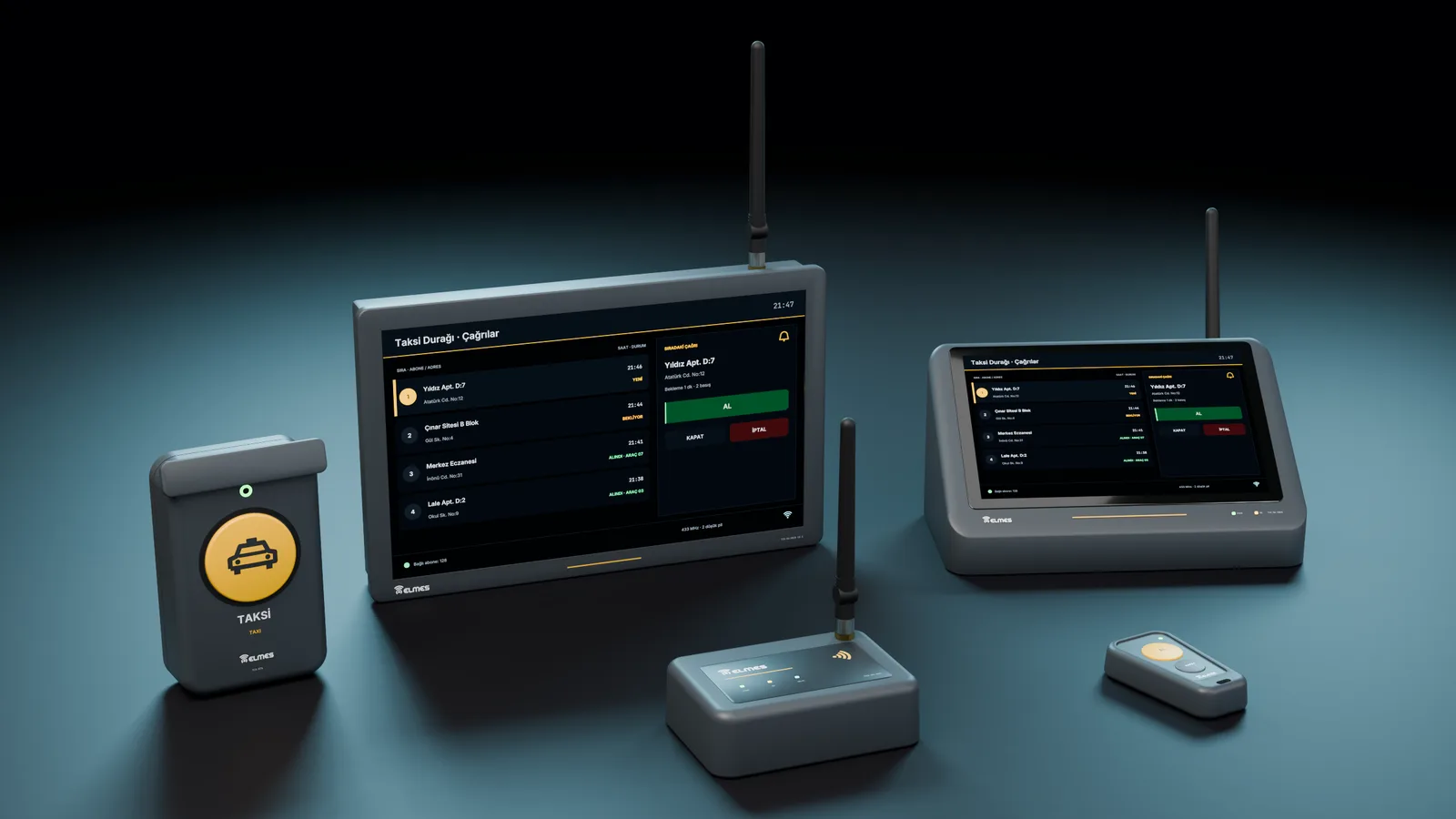
This product is in development or field testing. Contact us for technical information, pilot use and a preliminary quotation.
Features
- Compatible with installed buttons: the same RF settings as the subscriber buttons already in the field; gradual migration to LoRa.
- Touchscreen call list: subscriber name/address, time and queue; "take / close / cancel" with a single tap; selectable alert tone.
- Driver remote: take the next call without walking to the screen; every remote has its own ID, so the log shows which vehicle took the call.
- Web interface (ESP): subscriber registration, log export, Wi-Fi setup; no PC software needed.
- Repeat-press merging: repeated presses by the same subscriber count as a single call.
- TargetTwo-way LoRa: call confirmation by LED on the subscriber's button.
- TargetButton battery report: low-battery warning on the stand display.
- TargetReal-time clock and persistent log: call history kept with an RTC in Flash memory.
- TargetRepeater and neighbor-stand separation: range extension; stands fully separated by network ID (NetID).
- Target3-button subscriber version: taxi / cancel / emergency.
- TargetDriver pager: the WR-001 remote shows the call in the driver's pocket.
- TargetCloud log: call history kept on Telemetry & Process Intelligence.
System components
| Model code | Component | Hardware | Status | Request information |
|---|---|---|---|---|
| TCS-BTN | Subscriber call button | STM32F030 + CC1101; LoRa version planned on the battery profile of the Call Button Platform | Prototype | Request information: TCS-BTN |
| TCS-RX-DWIN | Stand receiver + 7 / 10-inch DWIN touchscreen + buzzer | PIC16F887 / ESP + CC1101; EM-G0LW-433 + DWIN T5L version planned | Prototype (UI 800×480 / 1024×600) | Request information: TCS-RX-DWIN |
| TCS-RX-WEB | Stand receiver without display, Wi-Fi web interface | ESP + CC1101; EM-G0LW-433 version planned | Prototype | Request information: TCS-RX-WEB |
| TCS-RMT | Driver remote (take / close call) | First prototype; move to the 1-button profile of the Call Button Platform planned | Prototype | Request information: TCS-RMT |
Specifications
Values marked “Target” are design targets, next-generation values or chip-vendor data; they are updated as measurement and certification are completed.
| Frequency (compatible profile) | ~434.65 MHz |
|---|---|
| Frequency (LoRa) | 433.05–434.79 MHz, 8 channelsTarget |
| Channels (compatible profile) | Single fixed channel (compatibility with installed buttons) |
| Channels (LoRa) | 8Target |
| Output power (compatible profile) | ≤ +10 dBm (CC1101) |
| Output power (LoRa) | +22 dBm (SX1268)Target |
| Receiver sensitivity (compatible profile) | ~−104 dBm @ 2.4 kbps (chip datasheet) |
| Receiver sensitivity (LoRa) | −129 dBm @ SF11Target |
| Modulation / rate (compatible profile) | 2-FSK, ~2.4 kbps, ~5 kHz deviation, 15-byte fixed packet |
| Modulation (LoRa) | LoRa SF7–SF10Target |
| Antenna | Button: internal PCB / helical antenna; receiver: external SMA, omni antenna |
| Urban (compatible profile) | Neighborhood scale (field experience; not measured) |
|---|---|
| Open field (LoRa) | ≥ 2000 m (SF9, stand outdoor antenna at 3 m height)Target |
| Urban (LoRa) | ≥ 500 mTarget |
| Coding (compatible profile) | ID + CRC; no encryption |
|---|---|
| Encryption (LoRa) | AES-128, NetID + 16-bit address, replay counterTarget |
| Neighboring stands (compatible profile) | Single channel; stands are separated by ID list |
| Neighboring stands (LoRa) | ≥ 8 neighboring stands via channel × NetIDTarget |
| Call latency | < 1 s (button → screen) |
|---|---|
| On communication loss | The call stays on the list |
| Button retry | The button resends the call if no acknowledgment arrivesTarget |
| Stand receiver | 12 VDC adapter (7-inch display ~0.5 A; 10.1-inch ~1 A) |
|---|---|
| Stand receiver (new version) | 12–24 VDC; optional battery backupTarget |
| Subscriber button battery | CR123A or 2×AA; ≥ 2 years at ~10 calls/dayTarget |
| Driver remote battery | CR2032 / CR123ATarget |
| Display | DWIN T5L DGUS II; 7-inch 800×480 or 10.1-inch 1024×600; UART 115.2 kbps |
|---|---|
| Receiver outputs | Buzzer; Wi-Fi web interface (ESP) |
| Beacon relay | 1× relayTarget |
| Service | SWD / UART; settings via the web interface |
| Receiver housing | Desktop / wall-mount display housing (7 / 10-inch bezel); IP20, indoor |
|---|---|
| Button housing | Wall-mounted; IP54 (outside door)Target |
| Operating temperature (receiver) | 0…+50 °C (indoor) |
| Operating temperature (button) | −20…+60 °CTarget |
| Warranty | 2 years; service in AnkaraTarget |
|---|
Applications
- Taxi stands
- Housing estates
- Neighborhood subscriber networks
- Municipal taxi stands
- Hotel and resort receptions
- Beach taxi calls
- Hospital, mall and airport taxi bays
With the profiles of the Wireless Call Button Platform, the same stand unit can also handle hotel service calls and housing-estate security calls. For service calls in hotels and restaurants, Wireless Waiter Call — Long Range is also available. On the driver side, the WR-001 LoRa Wireless Alarm / Call Remote is planned as a pager that shows the call in the driver's pocket.
Compliance & documentation
The system is at prototype stage. The datasheet, stand-operator and subscriber manuals, installation guide and certificates will be prepared step by step according to the plan below; the subscriber button is documented together with the Call Button Platform.
- TargetCE – RED 2014/53/EU (EN 300 220-2, EN 301 489-1/-3)Step by step, starting at module level
- TargetLVD – EN 62368-1Stand unit with adapter
- TargetRoHS declaration
- TargetCE declaration of conformity; user and installation manuals
Frequently asked questions
Will the subscriber buttons already at our stand work with the new receiver?
The new receiver uses the RF settings of the subscriber buttons already installed in the field (434.65 MHz, 2-FSK, 2.4 kbps), so those buttons keep working without replacement. Compatibility with buttons that use other RF settings is assessed separately. Migration to LoRa buttons is gradual; the two receivers can run side by side.
How many subscribers can one stand serve?
The new generation targets more than 1,000 subscribers per stand with 16-bit addressing. In the compatible profile, the number of subscribers is limited by the protocol's ID field.
Do neighboring stands see each other's calls?
In the single-channel compatible profile, stands are separated by their ID lists; unregistered IDs are not shown on the screen. In the new generation they are fully separated by channel and network ID (NetID).
What is the range?
In the compatible FSK profile it covers a neighborhood (no measured value yet); with the LoRa button, ranges in the kilometer class are targeted in open field. An outdoor antenna and a repeater extend it.
How long does the subscriber button battery last?
The target is ≥ 2 years at ~10 calls a day; a low-battery warning on the stand display is planned.
How does a driver take a call?
By tapping the screen or using their own remote; the log records which driver took it.
Can the subscriber see that the call was taken?
Not in the compatible profile; LED confirmation is targeted for the two-way LoRa button.
Is a phone or app required?
No; the system runs entirely on local RF and there is no subscription. The web interface is only for managing the stand.
What about the warranty?
A 2-year warranty is planned; the button battery is a consumable.
Get information about this product
Our engineering team replies within 24 hours.
Related products
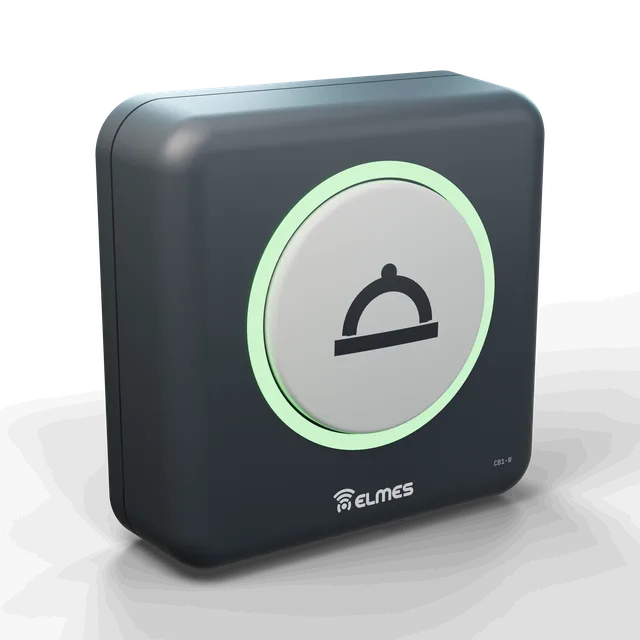 Coming soonRF & Wireless Systems
Wireless Call Button Platform
One button hardware for every call scenario.
View details: Wireless Call Button Platform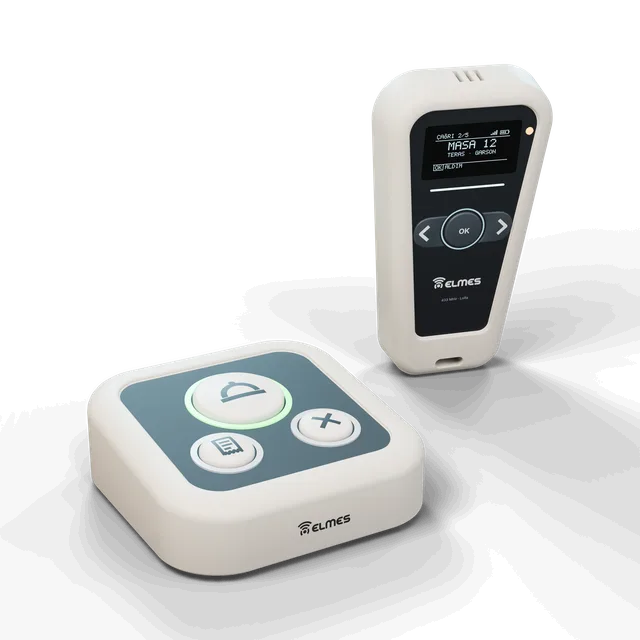 RF & Wireless Systems
Wireless Waiter Call — Long Range
From hotel interiors to the beach — simple, fast calls.
View details: Wireless Waiter Call — Long Range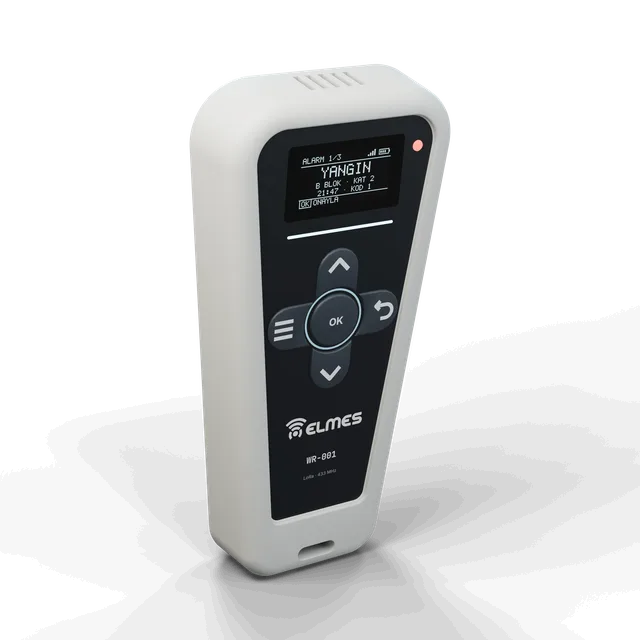 Coming soonRF & Wireless Systems
WR-001 LoRa Wireless Alarm / Call Pager
The alarm in your pocket — everyone sees who acknowledged it.
View details: WR-001 LoRa Wireless Alarm / Call Pager