OEM Device Control · Solution
Smartphone Machine Remote Control
Put the remote in your pocket: run the machine from your phone, safely and wirelessly.
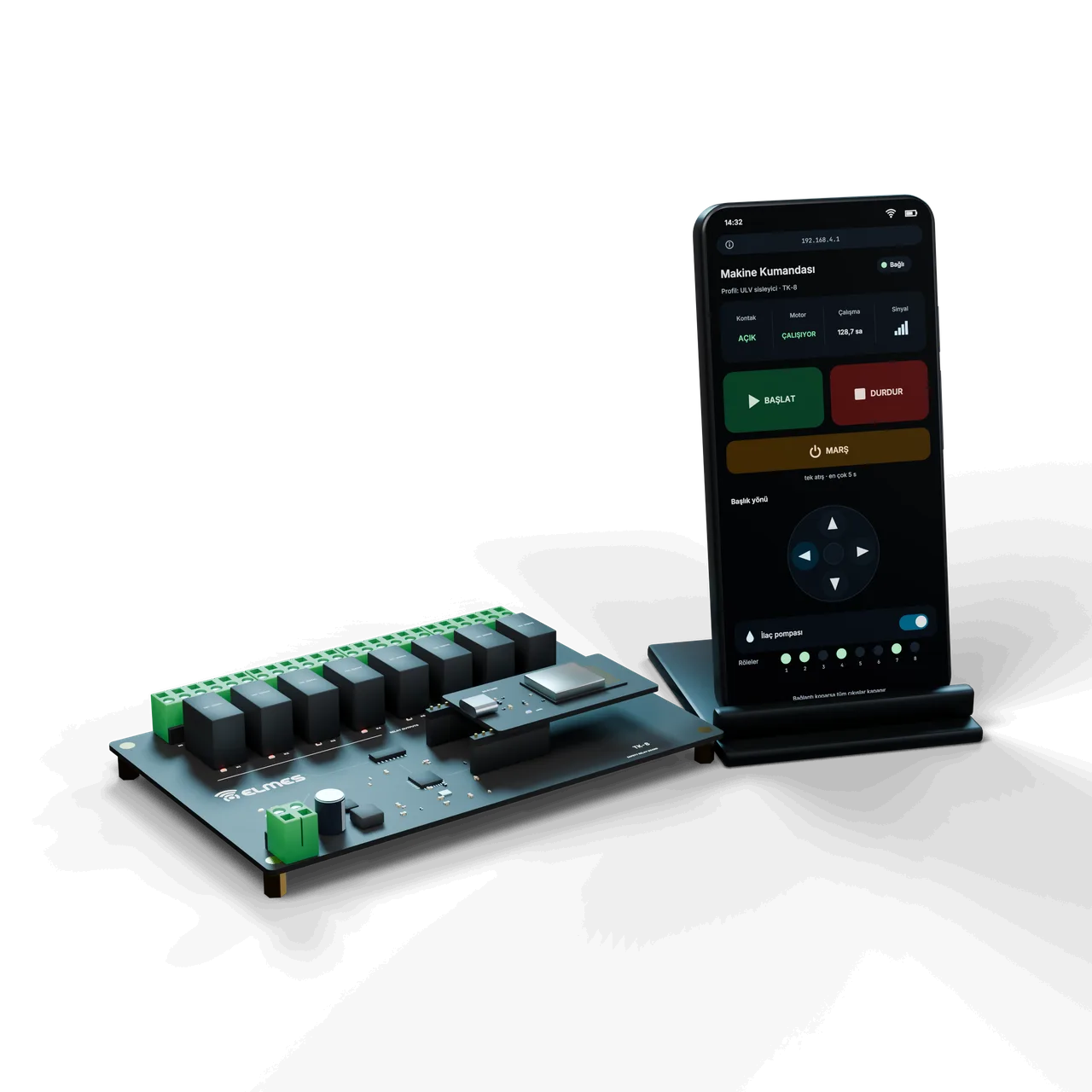
Overview
The problem. On fogging and spraying equipment, non-crane machines and vehicle-mounted equipment, the operator wants to stay away from the machine (chemicals, noise, visibility). Classic RF remotes are limited by channel count, one-way and have no display; they get lost, their batteries run out, and every machine needs its own transmitter. The mobile-app approach brings app-store processes, phone-model and cloud dependencies; above all, if the safety logic is left to the phone, the machine can keep running when the connection drops.
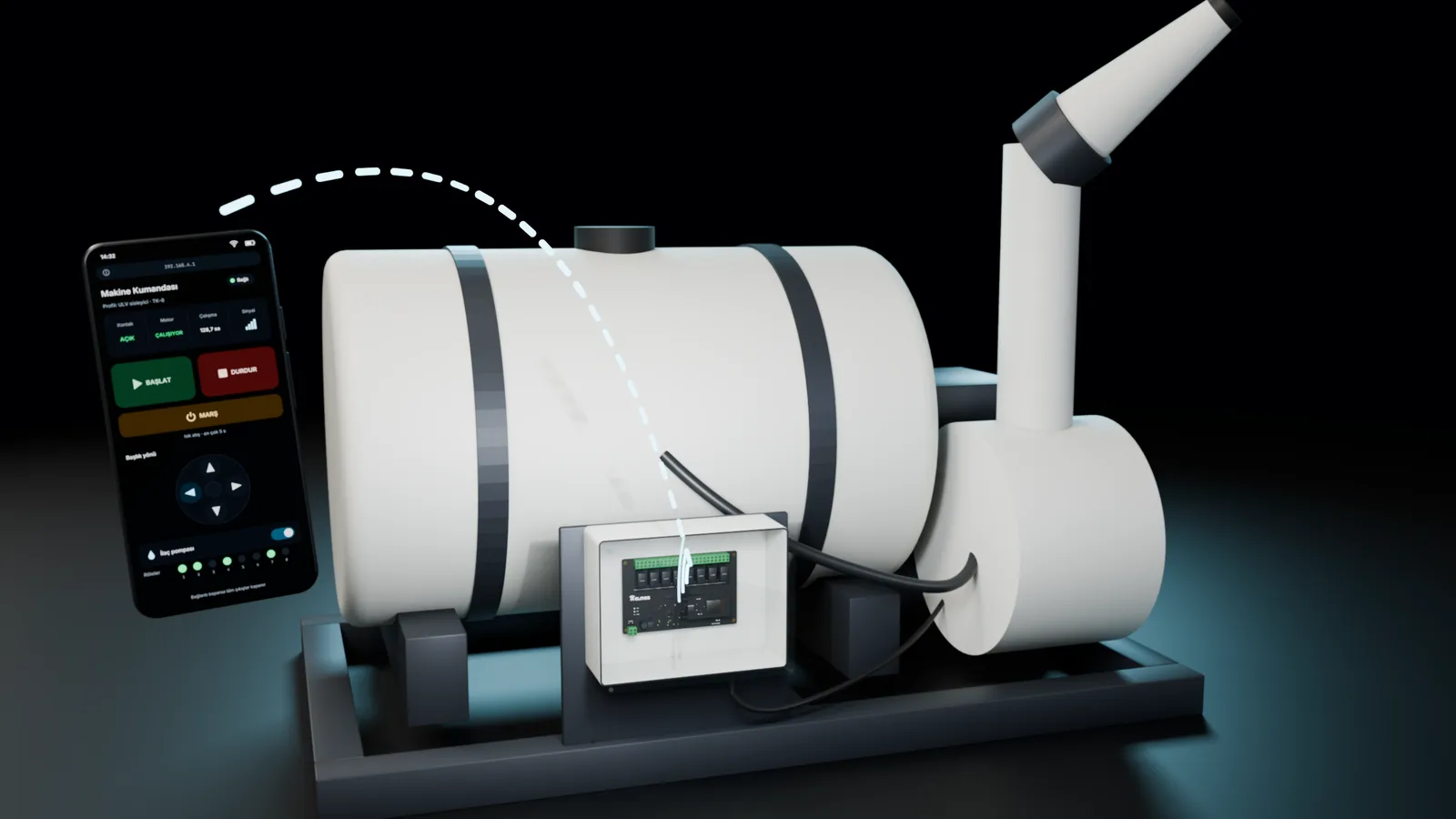
The solution. An ESP32 control unit is fitted to the machine; it opens its own access point (and can also join the existing plant network) and serves the interface to the phone as a captive-portal page. The interface talks to the unit over WebSocket; the unit passes the relay mask to the STM32 safety relay board over a 115200-baud UART. Momentary commands such as direction and start are active only while a finger is on the screen and fall back to a safe state through three separate timeouts (phone 800 ms, connection, daughterboard 500 ms). Start works only with the ignition on, for at most 5 s and once per ignition cycle; opposite directions are never energized together; the chemical pump runs only with the ignition on. Operating hours and the serial number are stored in the unit.
| RF handheld remote | Cloud mobile app | Elmes Phone Remote | |
|---|---|---|---|
| Extra hardware for the operator | Transmitter (battery, risk of loss) | None | None (phone) |
| Feedback | LED | Yes | Yes (status, operating hours, badges) |
| Internet required | No | Yes | No (local AP) |
| Fail-safe logic | In the receiver | In the cloud/phone | In the unit + safety board (dual timeout) |
| Customization | Channels/labels | App update | Profile file + APK |
This product is in development or field testing. Contact us for technical information, pilot use and a preliminary quotation.
Features
- Three-layer fail-safe: phone heartbeat (800 ms), WebSocket disconnect, daughterboard frame timeout (500 ms).
- Single-shot start and ignition interlock: protects the engine; the chemical pump cannot run without the ignition on.
- Joystick head direction: single or dual axis, two relays on the diagonals.
- Machine profiles: the same unit switches between machine models (valves, stages) from the settings page; all outputs turn off on a profile change.
- Operating hours and serial number: for service and warranty tracking, persistent in NVS.
- Demo mode: the interface runs in a browser without the ESP32, from a local file or with a demo parameter; for sales demos and training.
- AP+STA: joins the plant network; access without switching the phone's Wi-Fi network.
- TargetSession security: app PIN, single-active-controller lock, session timeout and a forced password change at first setup.
- TargetWi-Fi OTA and event log: wireless firmware updates and a persistent event log.
- TargetExternal antenna and 16 relays: an external antenna for wider coverage; a 16-relay safety board for valve and stage outputs.
Variants
| Model code | Contents | Relays | Interface | Status | Request information |
|---|---|---|---|---|---|
| TK-8 | ESP32 control unit + 8-relay STM32 safety board | 8 | Captive-portal web + Android APK | Prototype (MVP) | Request information: TK-8 |
| TK-16Target | 16-relay safety board (valve/stage outputs) | 16 | Same as TK-8 | Planned (16-bit mask ready on the ESP side) | Request information: TK-16 |
| TK-MTarget | ESP32 module only (the OEM connects it to its own mainboard over UART) | — | Same as TK-8 | Planned; integrated into the OEM platform mainboard | Request information: TK-M |
| TK-APKTarget | Branded Android app (OEM logo, machine profiles) | — | APK | Planned (demo APK available) | Request information: TK-APK |
Specifications
Values marked “Target” are design targets, next-generation values or chip-vendor data; they are updated as measurement and certification are completed.
| Wi-Fi | SoftAP + captive portal (192.168.4.1); option to join the plant network (AP+STA), .local name via mDNS; single radio: the AP channel follows the STA channel |
|---|---|
| Range | ≥ 30 m around the machine (Wi-Fi, open field)Target |
| MCU | STM32 (F070 family) on the safety relay board; ESP32 in the control unit |
|---|---|
| Unit-to-board link | UART 115200 baud: Serial2 (GPIO17/16) on the dev board; UART0 ↔ STM32 USART1 on the mainboard |
| User interface | Single-file HTML embedded in the unit, no external dependencies; WebSocket v1.1 |
|---|---|
| Indicator | GPIO2 LED (client connection status) |
| Relay outputs | 8 relays |
|---|---|
| Relay outputs (extended) | 16-relay board; 16-bit mask already in the protocolTarget |
| Contact rating | 10 A / 250 VACTarget |
| Daughterboard timeout | Momentary relays are released if no valid frame arrives within 500 ms |
|---|---|
| Interlocks | Opposite-direction interlock; start ≤ 5 s + 3 s cool-down, single shot; chemical pump only with ignition on; phone heartbeat 800 ms |
| Authentication | Wi-Fi WPA2 password (default password on the label) |
|---|---|
| Session security | Forced password change at first setup, app PIN, single active session, session timeoutTarget |
| Machine profile | Button set, relay map, single/dual-axis joystick |
|---|---|
| Persistent data | NVS: machine profile, serial number (1–20 characters), operating hours (counted while the ignition is on) |
| Firmware loading | Loading over USB/UART |
| OTA | Wi-Fi OTATarget |
| Logging | Serial log (115200 baud); operating hours |
| Event log | Persistent event logTarget |
Applications
- ULV foggers
- Vehicle-mounted sprayers
- Agricultural spraying machines
- Disinfection machines
- Conveyors
- Concrete pump auxiliary functions
- Light / heater / pump start-stop
- Door and barrier control
On vehicle-mounted ULV foggers and sprayers (18–23 HP engines), the operator controls the machine safely while standing away from it. On non-crane mobile machines (conveyors, concrete pump auxiliary functions), it complements Wireless Machine Start & Control.
For OEMs using their own mainboard, only the ESP32 module (TK-M) connects over UART; integration into the Elmes OEM Device Control Platform mainboard is planned.
Compliance & documentation
- TargetCE – RED / EMCBuilding on the ESP32 radio module certification
- TargetSafety concept (risk analysis, timeouts)
- TargetOperator manual
- AvailableTechnical documentation: installation and safety rules, UART/WebSocket protocols, firmware architecture, mainboard planElmes internal document
Frequently asked questions
Is an internet connection required?
No; the unit opens its own Wi-Fi network. Optionally, it can also join the plant network.
Does it work with an iPhone?
Yes; the captive portal opens in the browser, and the unit can also be reached by its .local name via mDNS. The APK is Android-only.
What does the machine do if the phone is dropped or the connection is lost?
Momentary relays are released within 800 ms; if the daughterboard receives no valid frame for 500 ms, it releases the relays on its own. Latched outputs (lights, ignition) keep the user's last state; "Stop all" is always available.
Can two phones control the machine at the same time?
Technically, two phones can connect today; a single-active-session lock is planned.
Can it be adapted to another machine?
Yes; the profile (buttons, relay map, interlocks) and, if needed, the relay count are adapted under NRE.
How is password security handled?
The network is protected with WPA2; change the default password at first setup. An app PIN and session timeout are planned.
Does it work alongside an existing RF remote?
This is planned: the safety board can be adapted to accept command masks from several sources; this is being developed as part of the Elmes OEM Device Control Platform.
Get information about this product
Our engineering team replies within 24 hours.
Related products
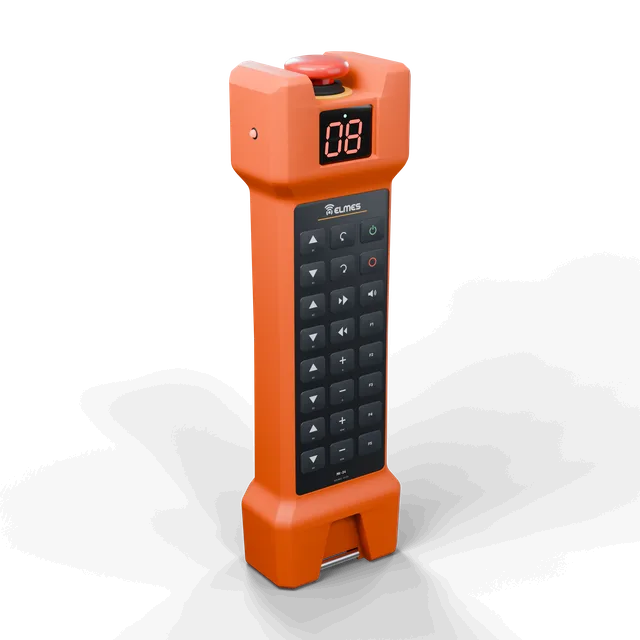 RF & Wireless Systems
Wireless Machine Start & Control
Crane-proven remote control, for every machine.
View details: Wireless Machine Start & Control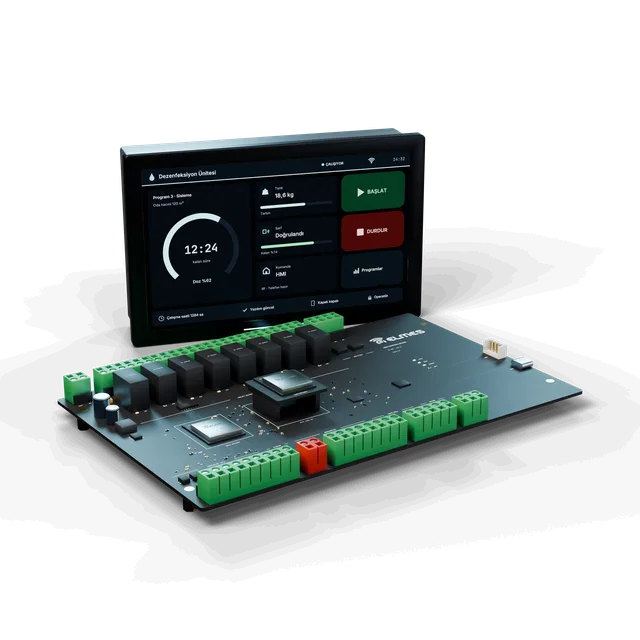 OEM Device Control
Elmes OEM Device Control Platform
Your device's electronics are ready — you focus on the machine.
View details: Elmes OEM Device Control Platform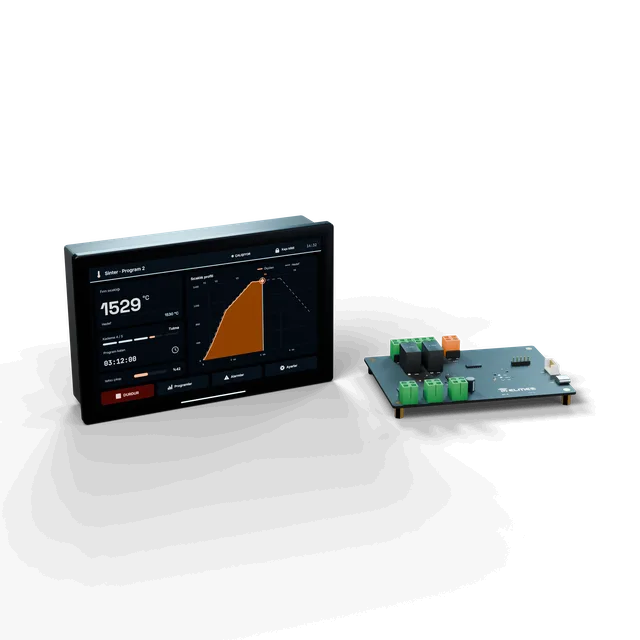 Coming soonOEM Device Control
Elmes Thermal Process Controller (sintering, drying, heat treatment)
A furnace controller that runs programmed temperature profiles safely and resumes where it left off.
In field testing
View details: Elmes Thermal Process Controller (sintering, drying, heat treatment)