Services · Service
Industrial Software Development (PC / Mobile / Web)
We write the software for your devices in the field, too.
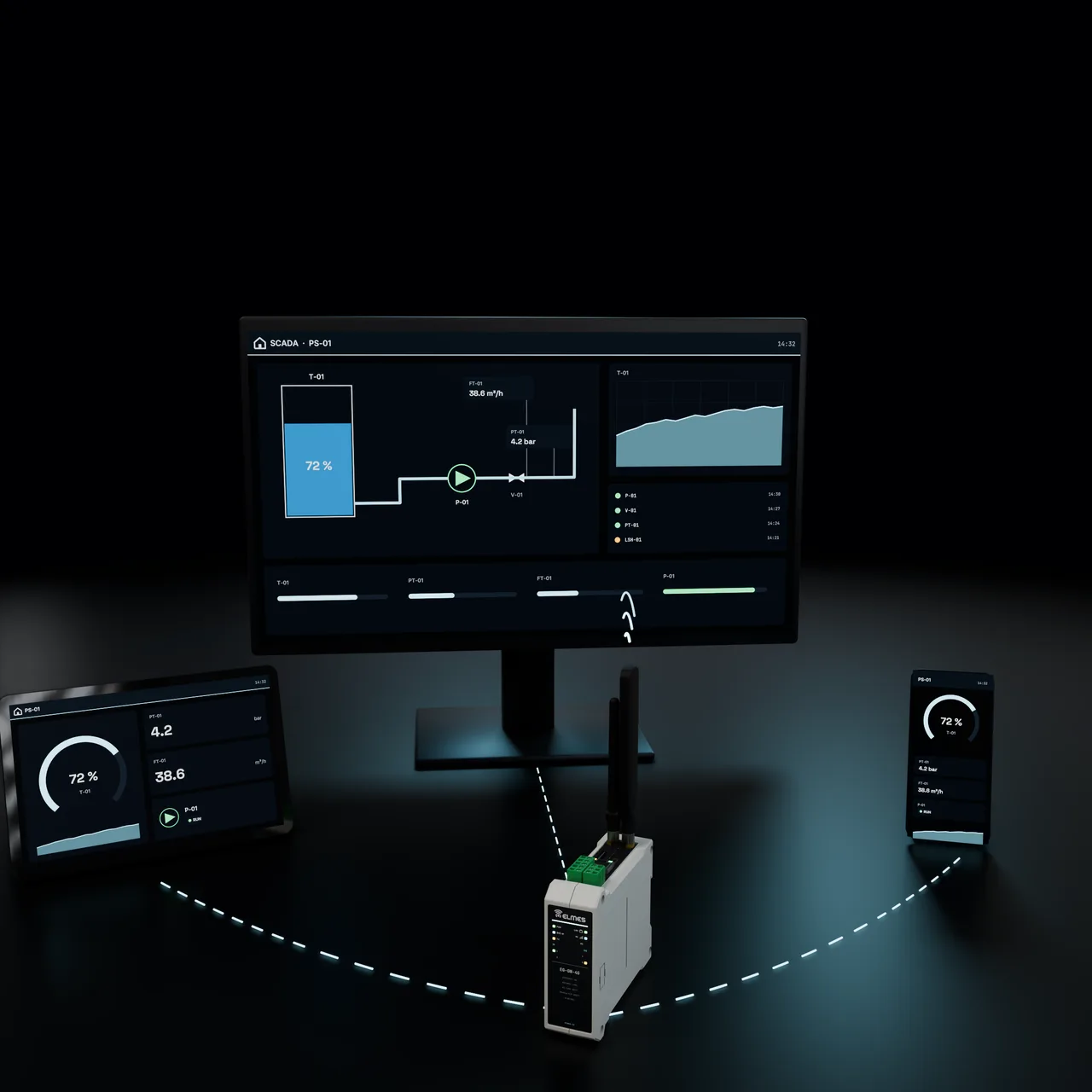
Overview
The problem in the field. The device is ready, but configuration is done with "hex commands in a terminal program"; the service technician can't pull logs; multiple devices can't be monitored from one place; the customer asks for reports and the data is typed into Excel by hand. General software firms don't know serial ports, Modbus, timestamps or outage behavior; device makers don't employ software developers. The result: a lack of tools and a dependency that lower the device's value.
The Elmes solution. Discovery maps out the user roles (operator, service, manager), the data model and the protocol list, and the architecture is chosen (desktop/web/mobile, on-premises/cloud). If the device side is from Elmes, the protocol is designed together; if not, a driver is written from the protocol document and verified against a test device. The application layer covers configuration, calibration, logging, history, reporting, fleet view, users/permissions and firmware upload. Deployment: installer package, Docker/service, APK; release notes and maintenance.
The result. A device that can be sold as "it comes with software": service time drops, the fleet is monitored on one screen and data turns into reports. Source code and documentation are handed over to the customer as per the contract; a maintenance package keeps releases going.
| Criterion | General software firm | Device maker's own team | Elmes |
|---|---|---|---|
| Serial/Modbus/MQTT/device protocols | Learns them | Knows them | Knows them, wrote most of them |
| Development in step with firmware | No | Yes | Yes (same team as hardware development) |
| Offline/outage tolerance | Added later | Varies | Design principle |
| Desktop + web + mobile + gateway | Mostly one area | Rare | All four |
| Long life / maintenance | Ends with the project | Depends on staff | Maintenance package |
Features
- Device configuration tool pattern: parameter tree, calibration wizard, log download, firmware upload; the same skeleton is adapted to different devices.
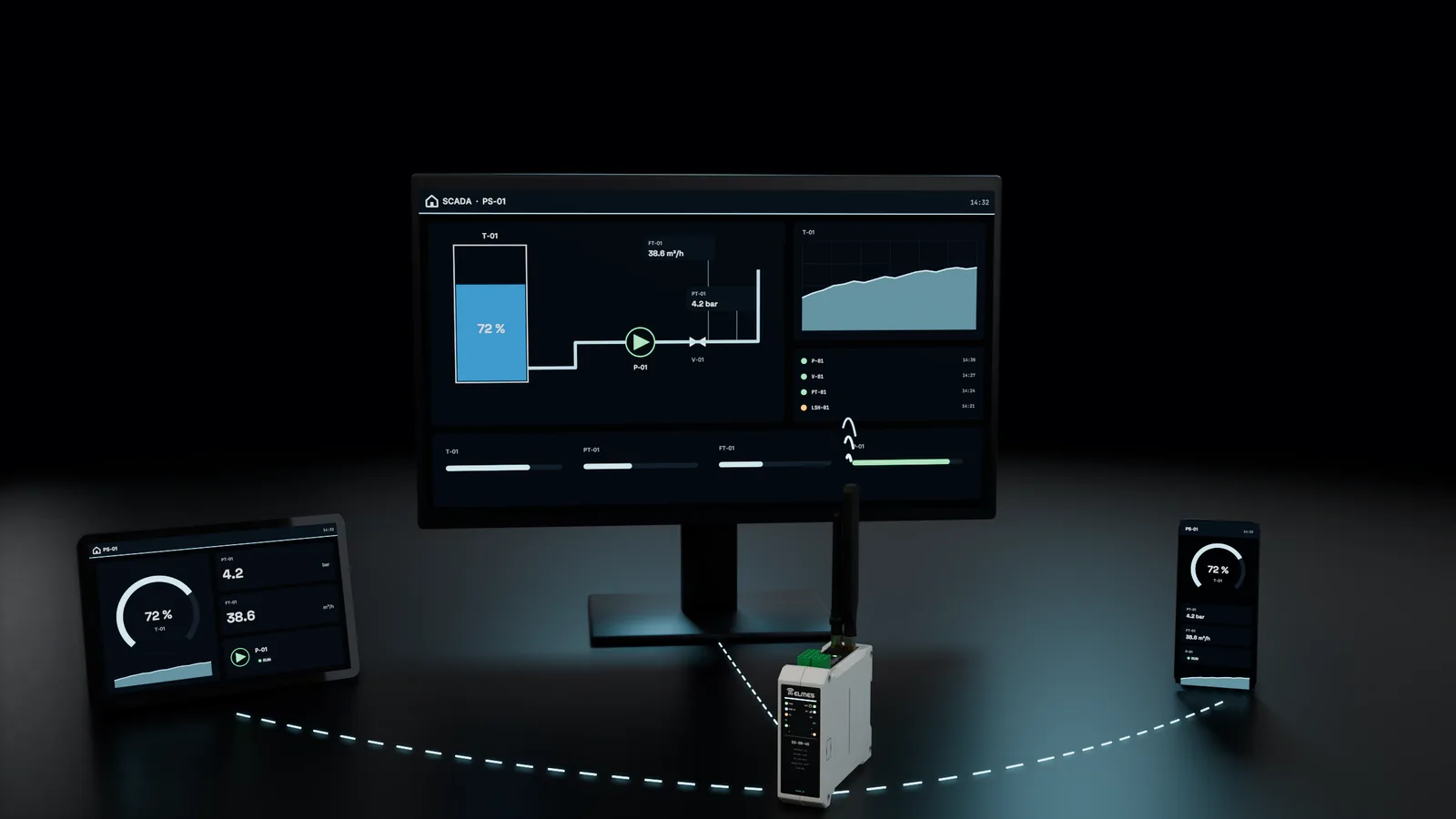
- Fleet/monitoring dashboard: device list, status, alarms, history, map; role-based access; the cloud side runs on Telemetry & Process Intelligence.
- Offline-first design: local buffering, synchronization, outage indicator.
- Protocol design: a common protocol framework with Elmes devices (serial/TCP framing, CRC, versioning); drivers for the customer's device.
- Reporting: PDF/Excel, scheduled reports, per shift/day/month.
- Multiple languages and themes: TR/EN plus customer languages; the Industrial HMI & UI/UX Design design system.
- Captive portal / phone control: the device opens its own Wi-Fi network and the phone connects via a browser or app (the Phone-Based Machine Remote Control pattern).
- Gateway services: data acquisition on Raspberry Pi/Linux, CSV/DB, MQTT publishing, remote access (the software layer of the Wireless Gateway / RTU).
- Data analysis interfaces: FFT, trends, thresholds/alarms (experience from VibroBal and the balancing measurement system).
- Long service life: pinned dependencies, LTS releases, installer packages; modernization of legacy .NET/WPF applications.
Service scope
Indicative durations and pricing depend on project scope; final figures are set in the quotation.
Values marked “Target” are design targets, next-generation values or chip-vendor data; they are updated as measurement and certification are completed.
| Scope |
|
|---|---|
| Out of scope |
|
| Process | Discovery → technical design → development (sprint deliveries every 2–3 weeks) → testing → deployment → training → maintenance. |
| Typical duration Indicative |
|
| Deliverables |
|
| What we need from you |
|
| Team & tools | Team: software engineer (.NET/Python/TypeScript), embedded engineer (protocols), UI/UX designer. Tools: Visual Studio, VS Code, Qt Creator, Android Studio, PostgreSQL, Docker, Git; serial-port and protocol test tools; internal project management and AI-assisted development tools (internal use). |
| Pricing model Indicative |
|
| Warranty & maintenance | Maintenance package: OS/library updates, minor features, backup checks. Critical operations get a separate SLA. |
| Response time Indicative | Remote: 1–2 business days. |
| Target warranty Target | Bug fixes: 6 months after delivery. |
Applications
- OEM device configuration and service tools
- Device fleet monitoring dashboards
- Machine control PC software
- 3D operator interfaces
- Irrigation and water automation software
- Fire / patrol / call center displays
- Measurement data acquisition and analysis
- Sports timing and scoreboard apps
- Phone-based machine control
The software layers of Elmes's own products come from the same team: a PyQt PC application, a CSV log service on Raspberry Pi and a map HMI for the Wireless Fire Alarm System (Firesens); an ESP32 captive portal and Android app for Phone-Based Machine Remote Control; USB data acquisition and a Python/PyQtGraph FFT interface for the balancing measurement system. Work that needs AI is handled under AI Agent Development & Integration.
Compliance & documentation
Contract. A statement of work (SOW) with milestones for fixed scope, or a man-day framework agreement for variable scope; maintenance as a separate annex. A mutual non-disclosure agreement (NDA) is signed; customer data and protocols are confidential, and portfolio use requires permission.
Intellectual property. In the default model, customer-specific application code passes to the customer after payment; Elmes's general libraries (protocol framework, device-tool skeleton, UI components) stay with Elmes and the customer receives a perpetual usage license. Source-code delivery and an escrow option are set out in the contract.
Licensing and distribution. Every delivery includes a third-party library license list; MIT/BSD/Apache-licensed components are preferred and any GPL impact is reported. Mobile apps are distributed as an enterprise APK or published on Google Play from the customer's account, in line with store policies.
- Self-declaredKVKK / GDPR — data inventory, retention period, hosting locationDefined per project for applications handling user and location data; in-country hosting is preferred.
- TargetKVKK data processing annex and processor agreement template
- Self-declaredIEC 62443 principles — industrial networksAuthentication, TLS-encrypted communication, password policy and permission logging.
References
Some of the organizations using this product family.
- Gürallar Porselen
- Sanko Holding
- Sonsan
- Hititkim
- Uzungil
- Sugabee
- Elmaksan / Datatasarım
Frequently asked questions
Our device comes from another manufacturer; can you write its software?
Yes; a protocol document and one test device are enough. If there is no protocol document, reverse engineering is assessed.
Desktop or web?
A service tool connected to the device from a single PC → desktop; monitoring from multiple users/locations → web; operator control in the field → mobile. We recommend one during discovery; hybrid solutions are common.
What happens when the internet goes down?
Offline-first design: local buffering, an outage indicator and synchronization once the connection returns; devices keep working independently.
Do we get the source code?
Customer-specific code, yes (under contract); Elmes's general libraries are used under license. An escrow option is available.
Can you modernize our existing legacy software (e.g. WPF/.NET)?
Yes, with analysis, data migration and a phased transition plan.
Is it hosted in the cloud?
Your choice: an on-premises server, your own cloud or the Elmes monitoring infrastructure (Telemetry & Process Intelligence). Hosting is billed separately.
How do maintenance and updates work?
An annual maintenance package: bug fixes, security/library updates and minor features; response within 1–2 business days (indicative).
How are duration and cost determined?
After discovery, a fixed-scope quote based on the technical design document; for variable scope, sprint-based man-days.
Can you add AI features?
Yes, together with AI Agent Development & Integration. This service covers classic industrial software.
Let's talk about your project
Our engineering team replies within 24 hours.
Related products
 RF & Wireless Systems
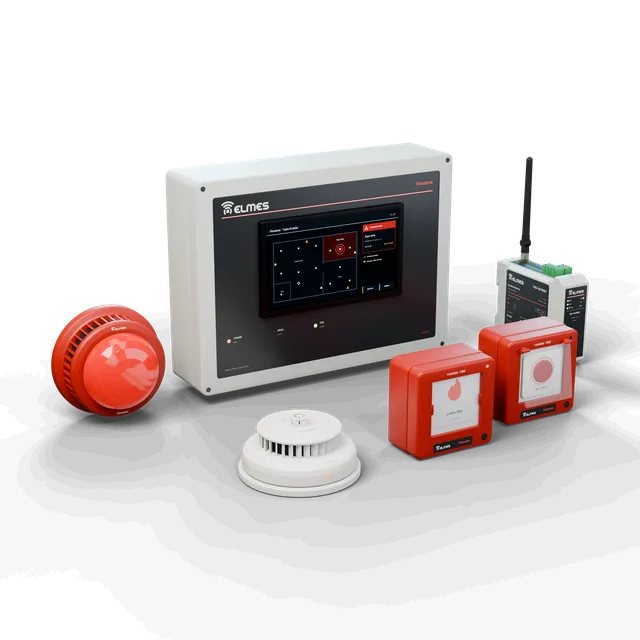
Wireless Fire Alarm System (Firesens)
Cable-free, flexible fire detection for industrial sites and sites with special requirements.
View details: Wireless Fire Alarm System (Firesens)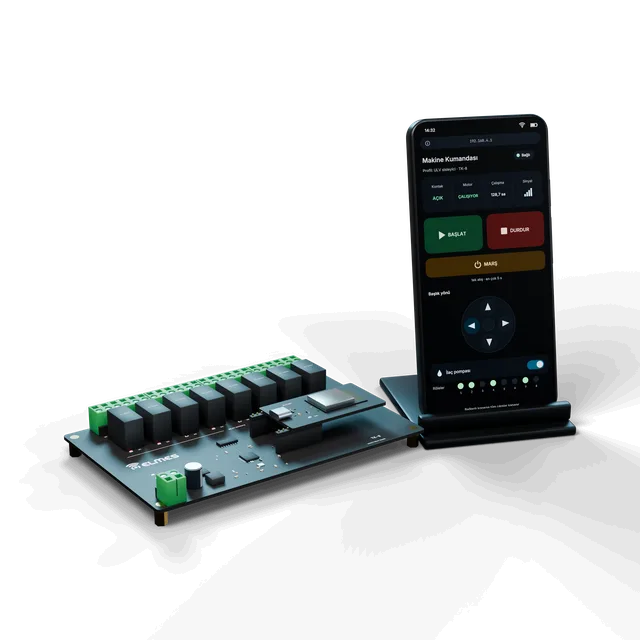 Coming soonOEM Device Control
Smartphone Machine Remote Control
Put the remote in your pocket: run the machine from your phone, safely and wirelessly.
View details: Smartphone Machine Remote Control Coming soonServices
AI Agent Development & Integration
Pipeline-based automation agents — human-approved, observable, scalable.
View details: AI Agent Development & Integration