Modules, Boards & Gateways · Hardware
Wireless Gateway / RTU
Connect every LoRa node in the field to SCADA, the cloud and PLCs with a single box.
Overview
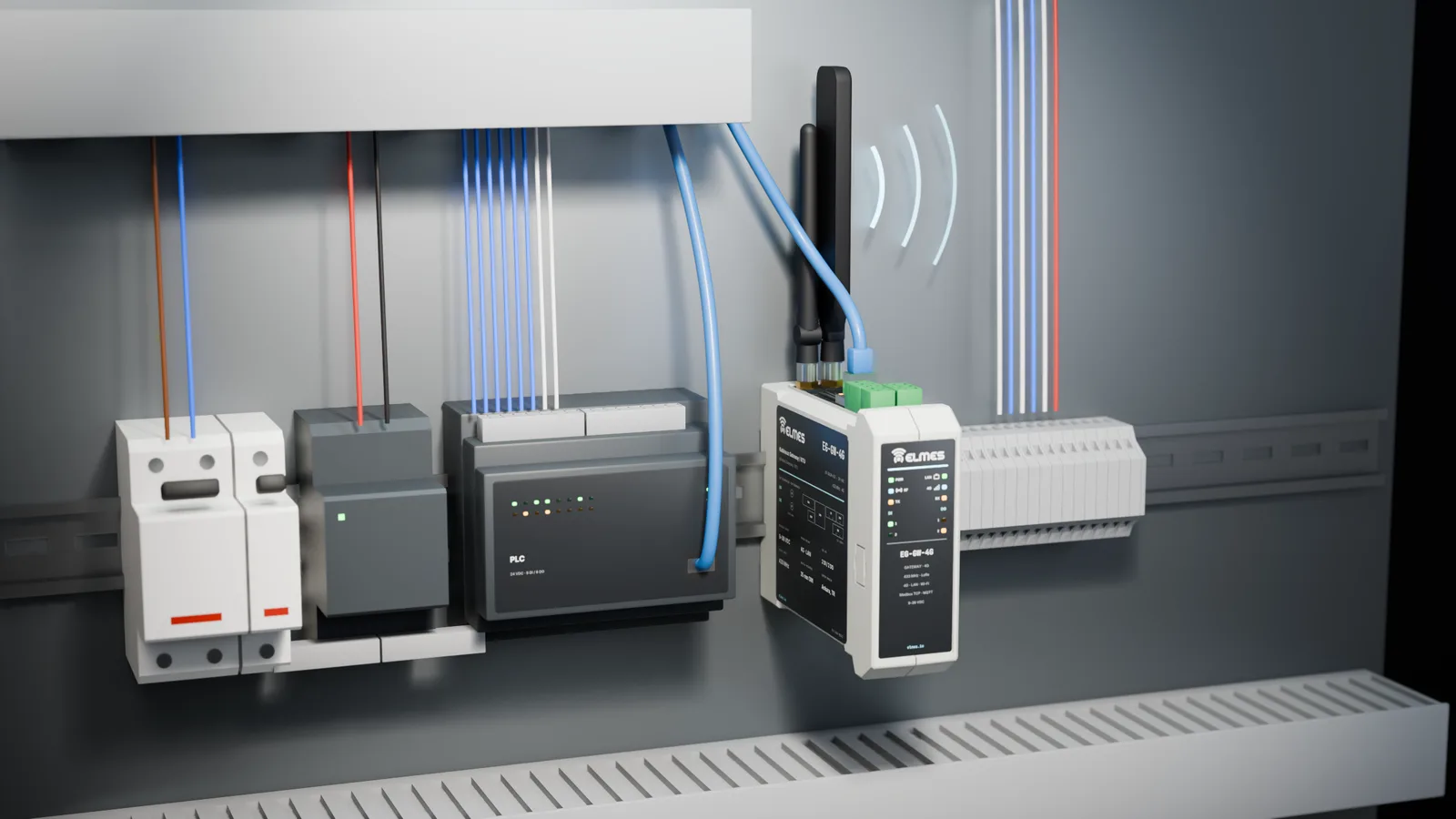
The problem. Once wireless nodes are installed in the field, the end that carries data to the control room is rebuilt for every project: a USB converter on a PC, a Raspberry Pi script, a GSM modem and hand-written protocols. This end is the most fragile part on site: it does not restart after a power cut, data is lost when the connection drops, PLC integration needs a separate converter, and updates have to be done on site.
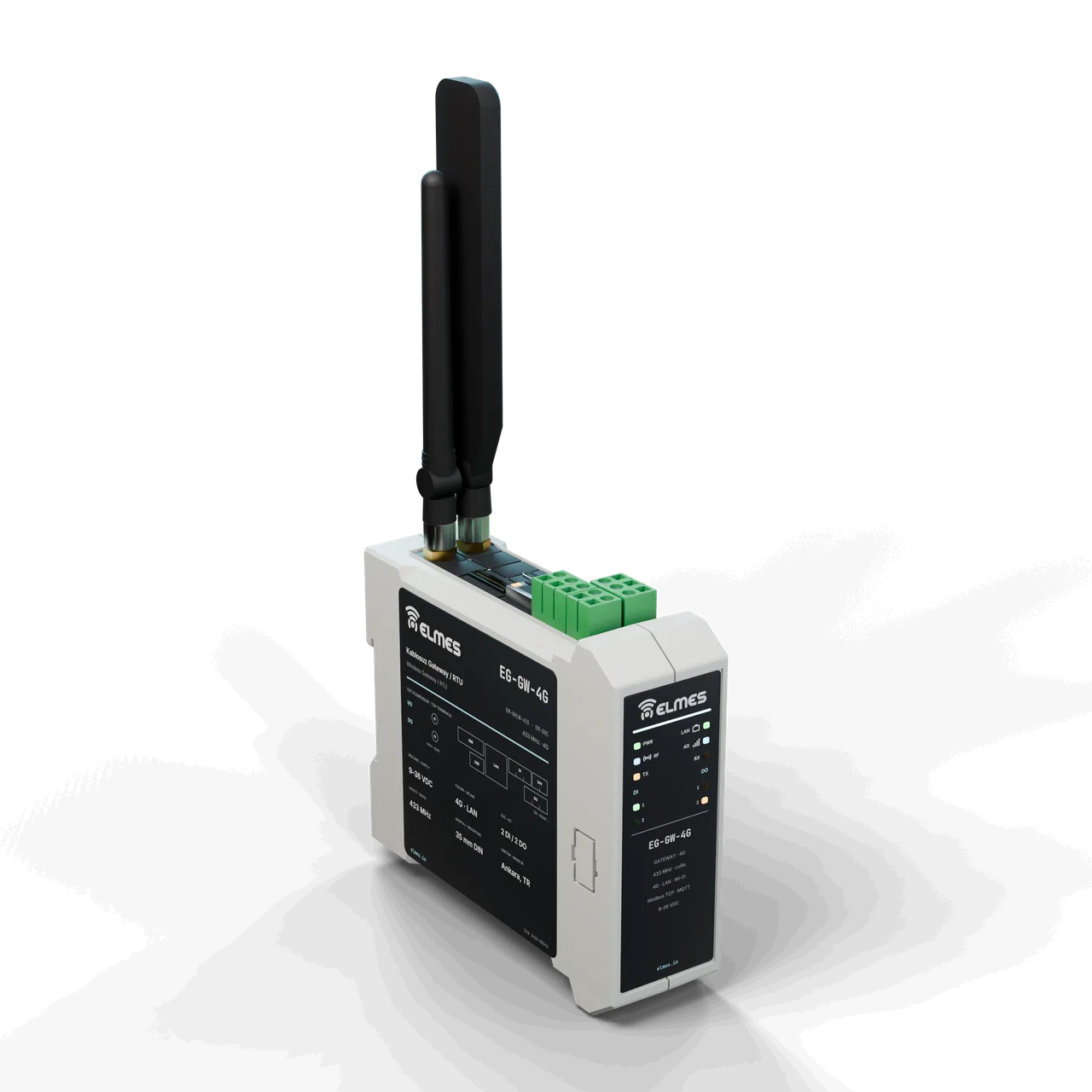
The solution. The Gateway/RTU turns the central end of the Elmes LoRa network into a standard product. The gateway layer forwards LoRa packets to a server over USB-CDC, Ethernet or 4G using a binary/JSON protocol, and to PLC/SCADA over Modbus TCP; the node list, polling interval and alarm acknowledgment are configured on the device. The RTU layer adds local I/O (carrier boards), a time-stamped buffer (no data loss when the link drops), rule-based local logic (threshold → relay, timers) and an RS485 Modbus master. The Edge-AI layer (planned) uses an STM32H7 to detect anomalies in node data on site and sends only events upstream.
Hardware. The device is built by fitting the EM-G0LW-433 module (STM32 + SX1268 + ESP32) onto the EC-GW board of the I/O Carrier Boards family. The RTU version adds local I/O with EC-DIO8 and EC-AIO boards; the 4G version uses the EM-G0C cellular module.
| PC + USB converter + script | Raspberry Pi gateway | Commercial LoRaWAN gateway | Elmes Gateway / RTU | |
|---|---|---|---|---|
| Works with Elmes nodes | Yes (script) | Yes | No (LoRaWAN) | Yes, natively |
| Power cuts / headless operation | Weak | Fair (SD card risk) | Good | Good (MCU, watchdog) |
| Modbus TCP / MQTT | Must be written | Must be written | MQTT | Built in |
| Local logic / buffering | None | Script | None | RTU layer |
| 4G | External modem | External | Option | Module (EM-G0C) |
| Price class | Low (fragile) | Low | Medium–high | Medium |
This product is in development or field testing. Contact us for technical information, pilot use and a preliminary quotation.
Features
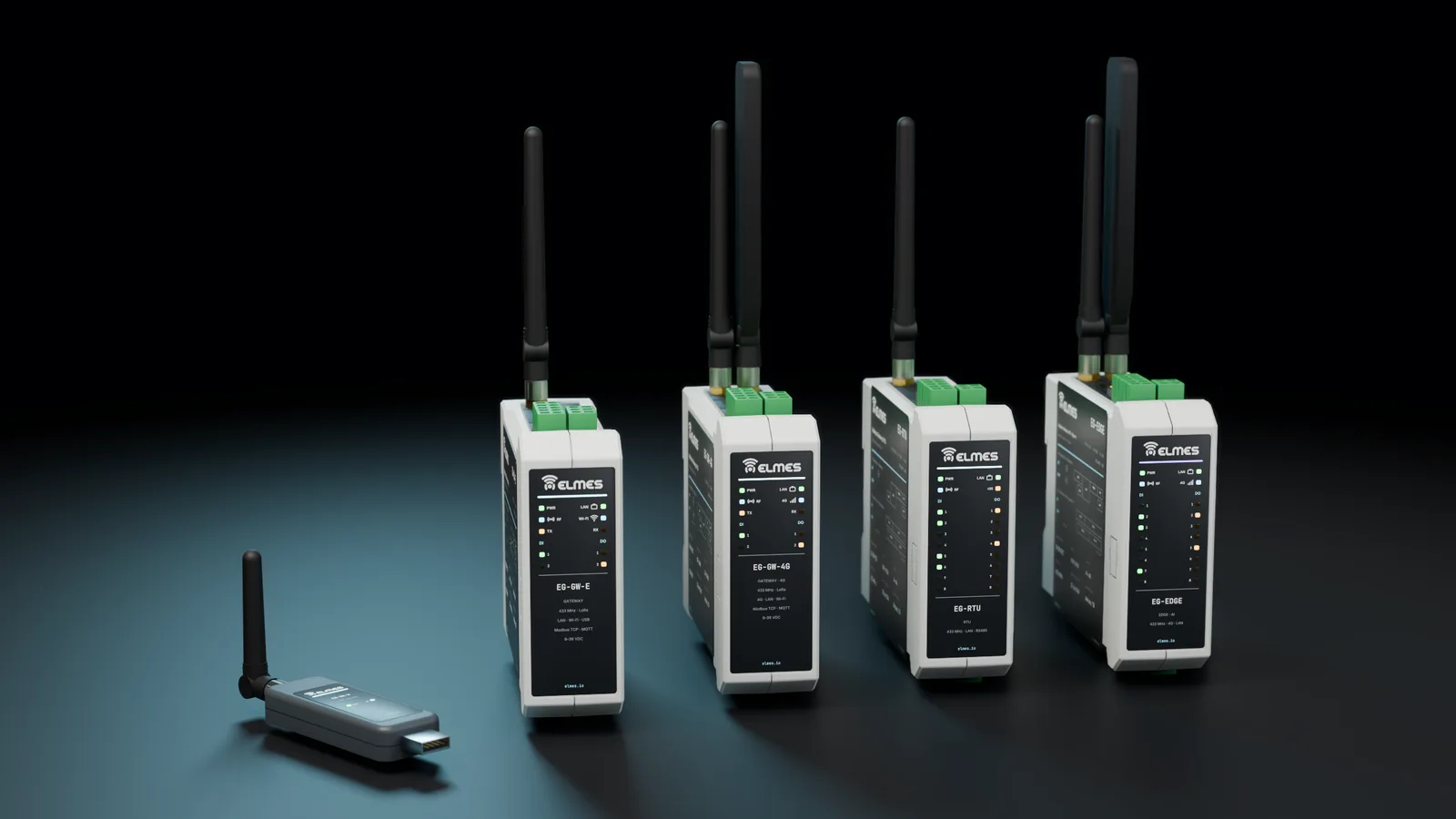
- Three layers on one hardware platform: gateway → RTU → Edge-AI by license and firmware build; same housing and pinout.
- Elmes node protocol built in: addressing, parameter writes (PARAM_WRITE), broadcast commands, alarm acknowledgment (ACK), status polling.
- Buffering and retransmission (RTU): lossless time series when the connection drops.
- Multiple uplinks: USB, Wi-Fi, Ethernet and 4G.
- Configuration: command-line tool and JSON file import/export.
- Firesens compatibility: works with the map-based DWIN HMI and PC application of the Wireless Fire Alarm System (Firesens).
- TargetLocal rule engine (RTU): threshold/timer → relay; local output from a node event (e.g. level → pump).
- TargetRedundant connectivity: multiple uplinks used as backups for each other.
- TargetWeb interface: on-device configuration interface running on the ESP32.
- TargetEdge-AI: anomaly scoring on vibration, meter and level data with an STM32H7, sending only events; predictive maintenance with VibroBal data (Telemetry & Process Intelligence).
Variants
| Model code | Layer | Module | Uplink | Local I/O | Status | Request information |
|---|---|---|---|---|---|---|
| EG-GW-U | Gateway | EM-G0LW-433 | USB-CDC (PC / Raspberry Pi) | — | Previous generation in the field (STM32F070 + SX1268, USB) | Request information: EG-GW-U |
| EG-GW-ETarget | Gateway | EM-G0LW-433 | Ethernet (EC-GW), Wi-Fi | 2 DI / 2 DO | Planned | Request information: EG-GW-E |
| EG-GW-4GTarget | Gateway | EM-G0LW-433 + EM-G0C | 4G Cat-1 / NB-IoT + Wi-Fi backup | 2 DI / 2 DO | Planned | Request information: EG-GW-4G |
| EG-RTUTarget | RTU | EM-G0LW-433 + EC-DIO8 / EC-AIO carrier boards | Ethernet / 4G | 8 DI / 8 DO / 4 AI (depending on carrier), RS485 | Planned | Request information: EG-RTU |
| EG-EDGETarget | Edge-AI RTU | EM-S7L-433 (STM32H7, module series) | Ethernet / 4G | RTU + on-device model | Planned (later phase) | Request information: EG-EDGE |
Specifications
Values marked “Target” are design targets, next-generation values or chip-vendor data; they are updated as measurement and certification are completed.
| Previous-generation hardware | STM32F070CB + SX1268 radio module, USB-CDC |
|---|---|
| USB protocol | USB-CDC, binary frame [0x55][cmd][len16][payload][CRC8] |
| Polling | Configurable interval (JSON configuration); immediate alarm acknowledgment |
| Host service | Raspberry Pi service, CSV logging |
| Frequency band | 433.05–434.79 MHz ISM (SX1268) |
|---|---|
| 868 MHz option | SX1262-based 868 MHz versionTarget |
| Channels | 8 (200 kHz spacing, 125 kHz BW) |
| Output power | +22 dBm max. (SX1268 datasheet), adjustable |
| Receiver sensitivity | −129 dBm @ SF11/BW125 (datasheet) |
| Modulation / data rate | LoRa SF5–SF12, 0.018–62.5 kbps; (G)FSK |
| Antenna connector | SMA 50 Ω (on board); 433 MHz antenna (RF antenna series) |
| Open field | ≥ 2000 m (SF9, 2 dBi, 2 m)Target |
|---|---|
| Industrial / indoors | ≥ 300 mTarget |
| Packet integrity (previous generation) | 4-byte address + CRC16 |
|---|---|
| Encryption | AES-128-CCM; NetID + 16-bit addressTarget |
| Systems on the same site | Channel × NetID; ≥ 8 independent networksTarget |
| Number of nodes | ≥ 100 nodes (depending on the polling interval)Target |
|---|---|
| Node offline detection | N × polling interval (default N = 3)Target |
| Watchdog | Hardware watchdog (IWDG)Target |
| Ethernet / Wi-Fi | Wi-Fi (ESP32, EM-G0LW-433); Ethernet via the EC-GW boardTarget |
|---|---|
| 4G | EM-G0C module (Cat-1 / NB-IoT)Target |
| Protocols | Modbus RTU (RS485) and Modbus TCP server, MQTT client (JSON), USB binary/JSONTarget |
| Service | SWD + UART, USB |
| Supply | 9–36 VDC (shared with the EC boards) or USB 5 V (EG-GW-U) |
|---|---|
| Consumption | < 3 W (gateway); < 6 W 4G peakTarget |
| Local I/O | EC-GW: 2 DI / 2 DO; RTU: carrier board chain (8 DI / 8 relays / 4 AI / RS485)Target |
|---|
| Housing | DIN-rail housing, 6 modules wide; IP20Target |
|---|
| Warranty | 2 years; service in AnkaraTarget |
|---|
Applications
- Fire detection network hub
- Well/tank and pump telemetry
- Analog / digital data acquisition
- Meter reading
- Irrigation network hub
- Retrofit telemetry
- Call system hub
- Cloud SCADA and predictive maintenance
The Gateway/RTU is the shared central end of Elmes wireless systems:
- Fire detection network: Wireless Fire Alarm System (Firesens)
- Well/tank and pump telemetry: Wireless Well & Tank Control System
- Analog and digital data acquisition: Wireless Analog & Digital Data Transmitter, Wireless Digital I/O Link — 8 Channels
- Meter reading: Wireless Meter Reading Node
- Irrigation network: Wireless Irrigation Control System
- Retrofit telemetry: IIoT Retrofit Kit
- Call systems: Wireless Call Button Platform; alarms are forwarded to the WR-001 pocket pager
- Cloud SCADA and predictive maintenance: Telemetry & Process Intelligence
Compliance & documentation
The Gateway/RTU is under development. Radio compliance is being prepared in stages based on measurements of the fitted module.
- TargetCE – RED 2014/53/EU and EMCIn stages, based on module measurements
- TargetProduct datasheet
- TargetExternal protocol document (USB / Modbus / MQTT)
- TargetInstallation guide
Frequently asked questions
Is it LoRaWAN?
No. It uses the proprietary LoRa protocol of Elmes nodes (433 MHz ISM). A LoRaWAN bridge is not on the roadmap.
How many nodes can one gateway handle?
A 24-device network runs in the field on the previous-generation gateway; the target is 100 or more nodes, depending on the polling interval.
How does it talk to a PLC?
Through a Modbus TCP (Ethernet/Wi-Fi) or Modbus RTU (RS485) register map.
Is data lost when the internet connection drops?
In the RTU layer, data is buffered and sent once the connection is back; in the gateway layer, this is the upstream system's responsibility.
What happens to my existing Raspberry Pi setup?
The same USB protocol is kept; the Pi service also works with the new device and will later move onto the device itself.
What is needed for 4G?
The 4G module (EM-G0C), an antenna and a SIM card; MQTT and Modbus TCP work the same way.
When will Edge-AI be available?
It is a planned layer that will come in a later phase with the STM32H7-based EM-S7L-433 module (Elmes Module Series).
Get information about this product
Our engineering team replies within 24 hours.
Related products
 Coming soonModules, Boards & Gateways
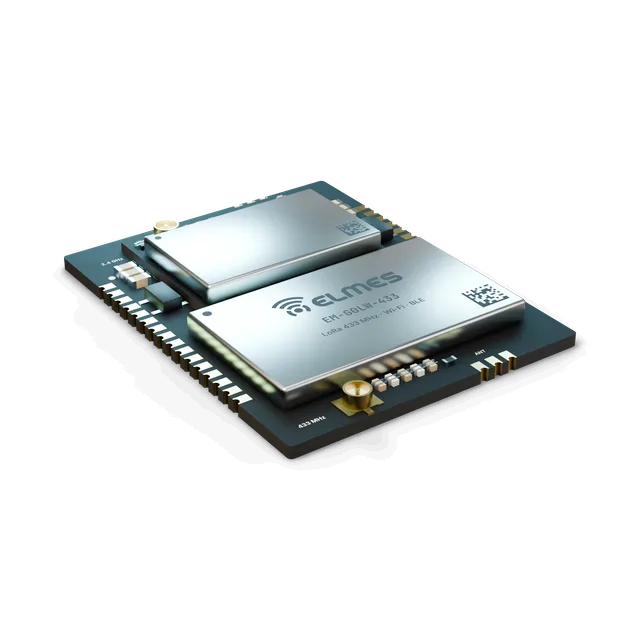
STM32 + SX1268 + ESP32 Module (EM-G0LW-433)
LoRa on the field side, Wi-Fi on the central side — a gateway core in one module.
View details: STM32 + SX1268 + ESP32 Module (EM-G0LW-433)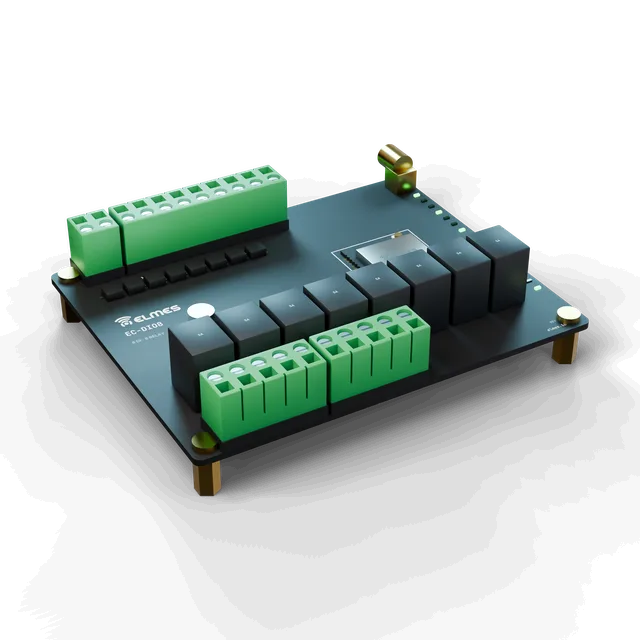 Coming soonModules, Boards & Gateways
I/O Carrier Boards (EC)
Plug in the module, wire the terminals — your wireless I/O box is ready.
View details: I/O Carrier Boards (EC)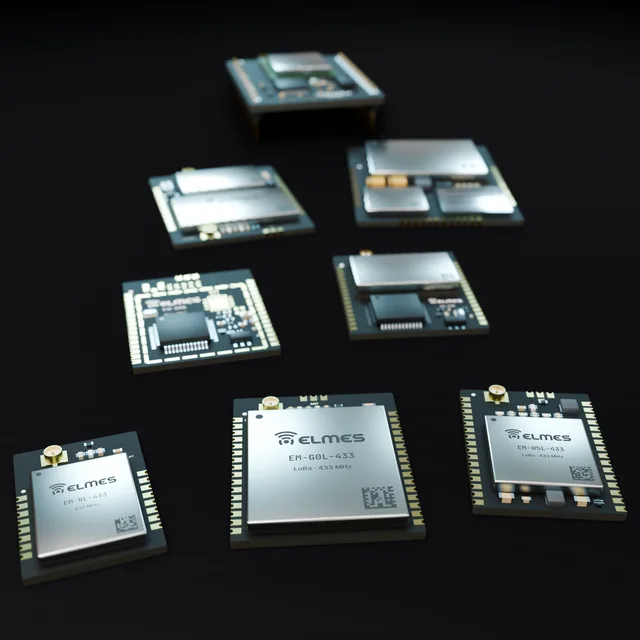 Coming soonModules, Boards & Gateways
Elmes EM Module Series
One pinout, one SDK — LoRa, Wi-Fi and cellular in a single module family.
6 members
View details: Elmes EM Module Series