Services · Service
Contract Electronic Product Development (ODM/OEM)
From idea to series production — hardware, software, testing, documentation.
Overview
The problem in the field. A machine builder's core business is mechanics and process; the electronic control board comes from outside. Typical problems: the board designer doesn't write firmware, the firmware developer doesn't build the HMI, and nobody thinks about production testing; the move to series production brings the "it worked on the prototype" problem; the CE file is remembered at the last minute; two years later components can't be sourced and the designer can't be reached. The electronics are redone from scratch for every new device, and the same mistakes are repeated.
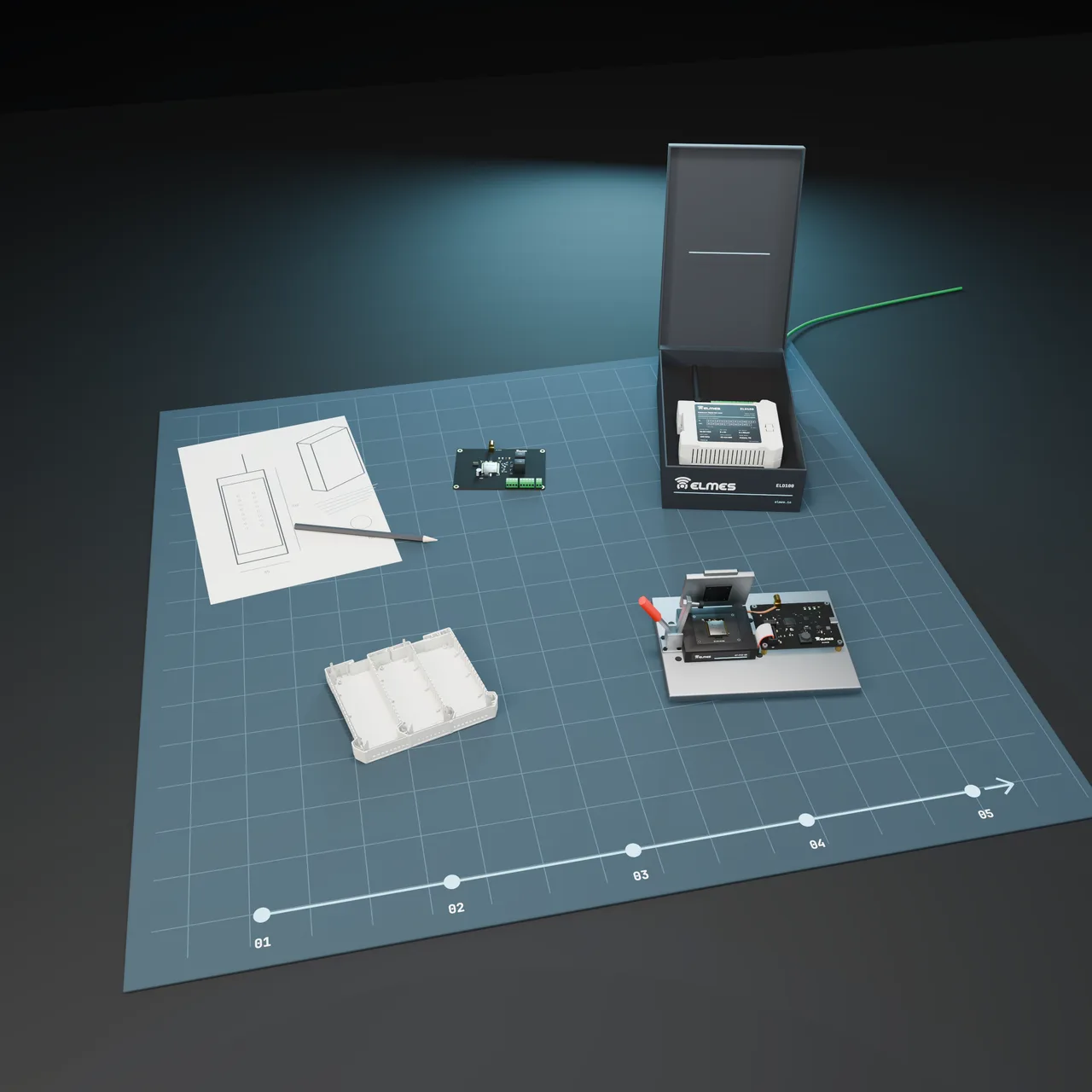
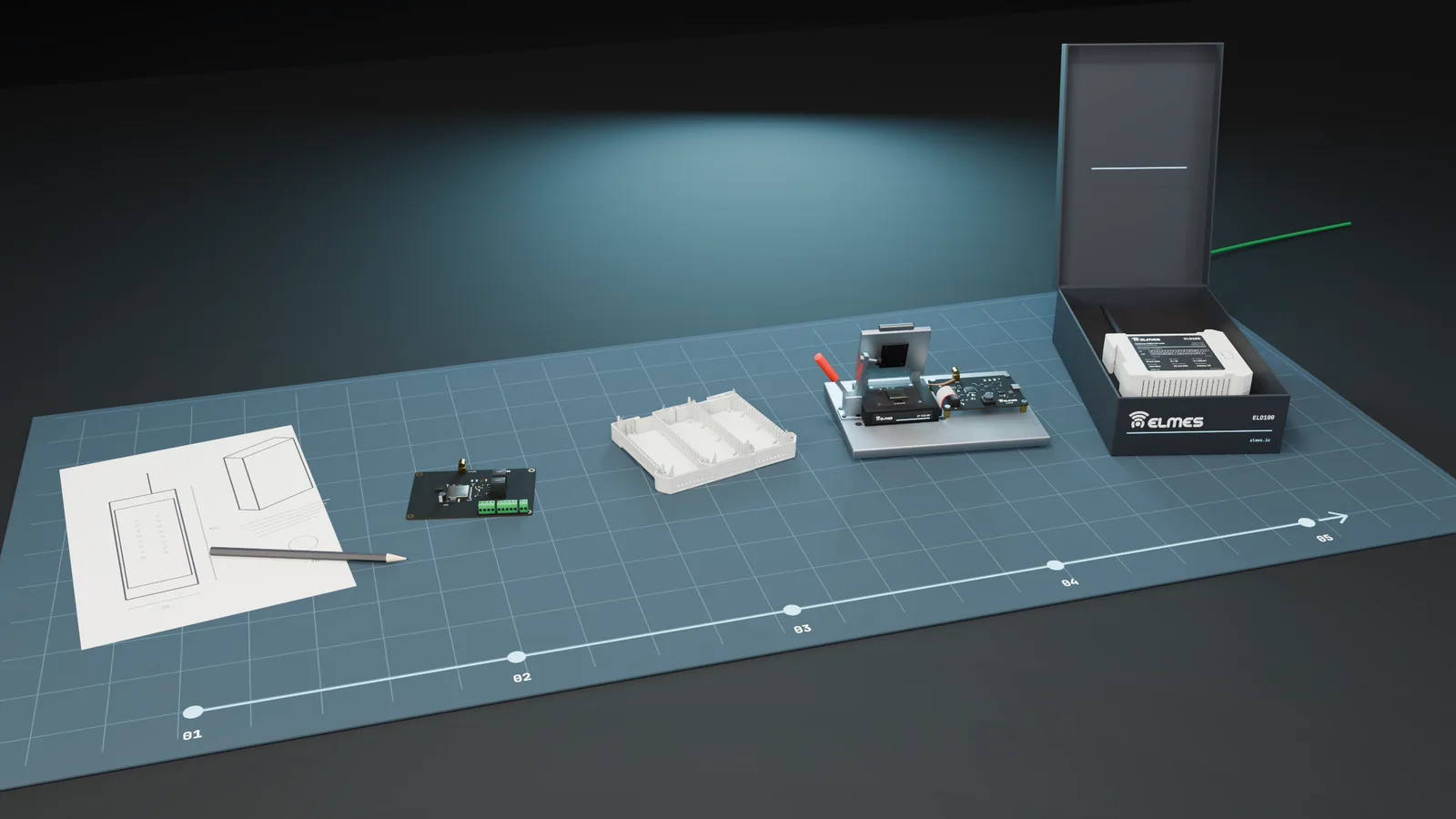
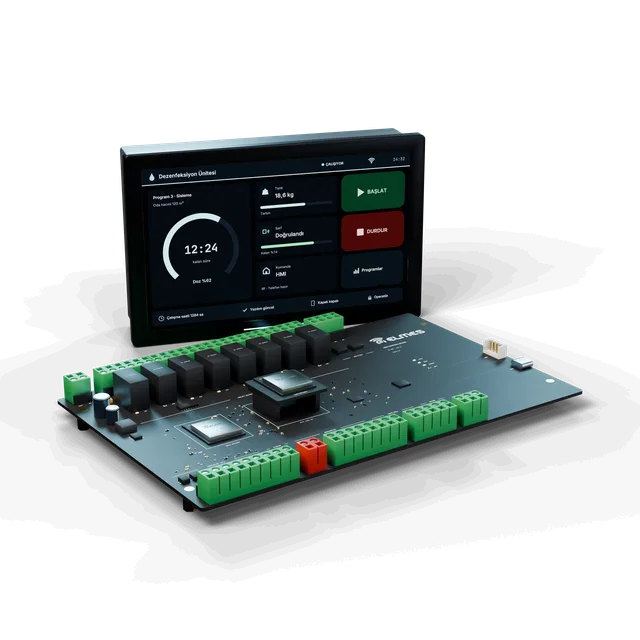
The Elmes solution. Discovery produces a requirements document and an architecture choice: for most devices the Elmes OEM Device Control Platform (main board + firmware framework + HMI) plus the modules needed (RFID consumable verification, weighing, RF/phone control, Wi-Fi); for wireless needs, the Elmes Module Series. Only the application package and the mechanical fit are customer-specific. The prototype is tested in our workshop and on the customer's machine, then revised with the findings from field testing. Production files (Gerber, BOM, assembly, test procedure, fixture) are prepared; the pilot batch passes Elmes testing; the CE technical file is prepared in parallel through Certification & Compliance Readiness Support. After production, field updates via bootloader/OTA and EOL tracking continue.
The result. The manufacturer receives the device electronics as a "product": documented, tested, updatable and backed by spares. The IP arrangement is clear in the contract: the customer-specific application belongs to the customer, the platform stays with Elmes, and the usage license is perpetual.
| Criterion | Freelance designer | Assembly/EMS company | Elmes |
|---|---|---|---|
| Schematic/PCB | Yes | No (customer supplies) | Yes |
| Embedded software + HMI | Mostly no | No | Yes (platform framework, HMI design) |
| Wireless / phone control | Rare | No | Yes (module series, phone control) |
| Production test and fixture | Rare | Yes (customer-defined) | Yes (with product knowledge) |
| CE technical file | No | No | Preparation and management |
| Post-production firmware/EOL support | Unclear | No | Under SLA |
Features
- Platform-based start: with the Elmes OEM Device Control Platform, programs/recipes, alarms, logging, PID and bootloader/OTA are ready; the customer pays only for the application package.
- Consumable verification (RFID/NTAG): cartridge/bottle recognition, counter and lock; a recurring-revenue model for the OEM.
- Weighing / consumption tracking: HX711 load-cell sub-board; level and dosing applications.
- Wireless and phone control: an RF remote family based on the Wireless Crane Control System, the ESP32-based Phone-Based Machine Remote Control; LoRa/Wi-Fi with the Elmes Module Series.
- Field updates: bootloader + Wi-Fi/USB OTA; the fleet in the field is updated from a single point.
- Production testing designed in: test points, programming/test fixture, production scripts; QC checklist and serial-number scheme.
- CE-ready design: EMC/RED principles applied in the design; pre-compliance measurement and technical file (Certification & Compliance Readiness Support).
- PC / fleet software: device configuration, log download, fleet monitoring (Industrial Software Development, Telemetry & Process Intelligence).
- Reverse engineering and platform migration: redesign of legacy boards, PIC→STM32 migration.
- AI-assisted design acceleration (internal use): schematic/layout groundwork with AutoPCB; customer deliverables are standard CAD files.
Service scope
Indicative durations and pricing depend on project scope; final figures are set in the quotation.
Values marked “Target” are design targets, next-generation values or chip-vendor data; they are updated as measurement and certification are completed.
| Scope |
|
|---|---|
| Out of scope |
|
| Process | Discovery → concept → prototype → field test → production → maintenance; six approval gates. |
| Typical duration Indicative |
|
| Deliverables |
|
| What we need from you |
|
| Team & tools | Team: hardware engineer, embedded software engineer, HMI/UX designer, software developer, production/test. Tools: Proteus, KiCad/Altium (per project), STM32CubeIDE, MPLAB X, ESP-IDF, FreeRTOS, AutoPCB (internal accelerator), oscilloscope, spectrum analyzer and RF measurement kit, programming/test fixture, contract assembly partner. |
| Pricing model Indicative |
|
| Warranty & maintenance | Firmware updates and EOL tracking are part of the maintenance package; a spare-board stock is optional. |
| Target warranty Target |
|
Applications
- Machine building (control board + HMI)
- Medical and dental devices
- Laboratory equipment (cabinets, ovens)
- Disinfection / fogging devices
- Test and measurement devices
- Traffic / signaling electronics
- Scoreboards and timing systems
- Wirelessly controlled devices
- Energy / battery display electronics
Elmes's own products are developed through the same process: the Elmes Thermal Process Controller (PID + dead-time compensation, program steps, 7-inch touchscreen; two manufacturer variants) and Phone-Based Machine Remote Control (ESP32 captive portal, safety relay, Android app). Modernizing an existing board, reverse engineering and PIC→STM32 migration follow the same process.
Compliance & documentation
Contract. Development runs under an NRE-based development contract (statement of work and milestones), series production under a supply agreement and maintenance under an SLA. A mutual non-disclosure agreement (NDA) is signed at the start of the project; the customer's device information and Elmes platform information are kept confidential on both sides.
Intellectual property. In the default model, the customer-specific application layer (the customer-specific part of the schematic/PCB, application firmware, HMI screens) passes to the customer after payment; the Elmes platform (main board design, firmware framework, modules, DiscOS, SDK) stays with Elmes and the customer receives a perpetual, per-device usage license. Source-code delivery and an escrow option are set out separately in the contract. A full-transfer model is quoted on request; exclusivity requests within the same vertical are written into the contract with a term and a fee.
Compliance. Elmes prepares the CE technical file at board level; for boards built into machines, Machinery Directive compliance rests with the machine builder. Depending on the product type, EN 60335 (household and similar appliances), EN 61010 (laboratory and measurement equipment) and EN ISO 13849 (safety functions, PL) requirements are taken into account in the design.
- AvailableCE technical file — board level (LVD 2014/35/EU, EMC 2014/30/EU, RoHS 2011/65/EU; RED 2014/53/EU when a radio module is fitted)Pre-compliance measurement and file preparation by Elmes; the declaration of conformity belongs to the manufacturer.
- Out of scopeMachinery Directive 2006/42/EC — machine-level conformityThe machine builder's responsibility; Elmes supplies the board-level file.
- Out of scopeMedical device (IEC 60601, MDR) and ATEX/Ex certificationPreparation support only; certification is handled by the customer and a notified body.
- TargetIPC-2221 (PCB design) and IPC-A-610 (assembly acceptance) as reference
References
Some of the organizations using this product family.
- Grup Medikal
- Murathan Mühendislik
- Samsun Karayolları
- ASAŞ
- Balçık Isı
- Fer Isı
- Eren Trafo
- Sertaç Makina
- Elmaksan / Datatasarım
Frequently asked questions
We only have an idea and no electronics know-how. Where do we start?
With the discovery package. We write the requirements document together, propose an architecture and give a time and cost range. This step can be ordered on its own.
Will we own the design?
The customer-specific application layer is yours; Elmes platform components (main board framework, firmware libraries) are used under a perpetual license. A full-transfer model can also be quoted on request.
What changes when moving from prototype to series production?
Production files are frozen, the test fixture and QC checklist are prepared, and the pilot batch passes Elmes testing. Every production board is tested on the fixture.
Do you handle series production?
Assembly is done at a contract partner, testing and QC at Elmes. If you prefer, you can have the boards built by your own manufacturer using the production files.
Do you issue the CE certificate?
No. We prepare the CE technical file, carry out pre-compliance measurements and manage the accredited lab process (Certification & Compliance Readiness Support). The declaration of conformity belongs to the manufacturer.
We already have a board and just want to modernize it.
That's possible. Reverse engineering and platform migration (PIC→STM32, wired→wireless) follow the same process.
Will we be able to update devices in the field?
Yes; a bootloader and Wi-Fi/USB OTA are built into the design, so devices in the field are updated from a single point.
What if a component becomes unavailable?
The maintenance package includes EOL tracking and a BOM with alternatives; a revision is quoted if needed.
How long does it take?
Indicatively: a prototype in 6–16 weeks, a production-ready full project in 2–9 months; a platform adaptation in 4–12 weeks.
Let's talk about your project
Our engineering team replies within 24 hours.
Related products
 OEM Device Control
Elmes OEM Device Control Platform
Your device's electronics are ready — you focus on the machine.
View details: Elmes OEM Device Control Platform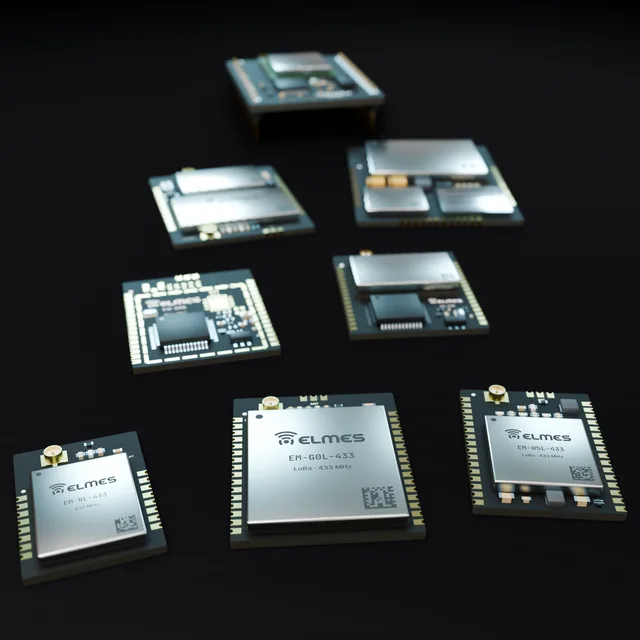 Coming soonModules, Boards & Gateways
Elmes EM Module Series
One pinout, one SDK — LoRa, Wi-Fi and cellular in a single module family.
6 members
View details: Elmes EM Module Series Services
Certification & Compliance Readiness Support
Design and technical files ready for the CE/RED route.
View details: Certification & Compliance Readiness Support