RF & Wireless Systems · Hardware
Wireless RS485 Modem
Extend your RS485 line wirelessly — no trenching, no cable.
Overview
The problem. Most PLCs, RTUs, energy analyzers and meters speak RS485/Modbus RTU. When devices are spread across a site (wells, reservoirs, pump stations, transformers, silos), running an RS485 line means trenching, conduit and cable costs; road and stream crossings or third-party land can make the line impossible. Existing cable runs break due to lightning, moisture and digging accidents, and finding the fault takes hours. GSM modems bring subscriptions and dependence on network coverage.
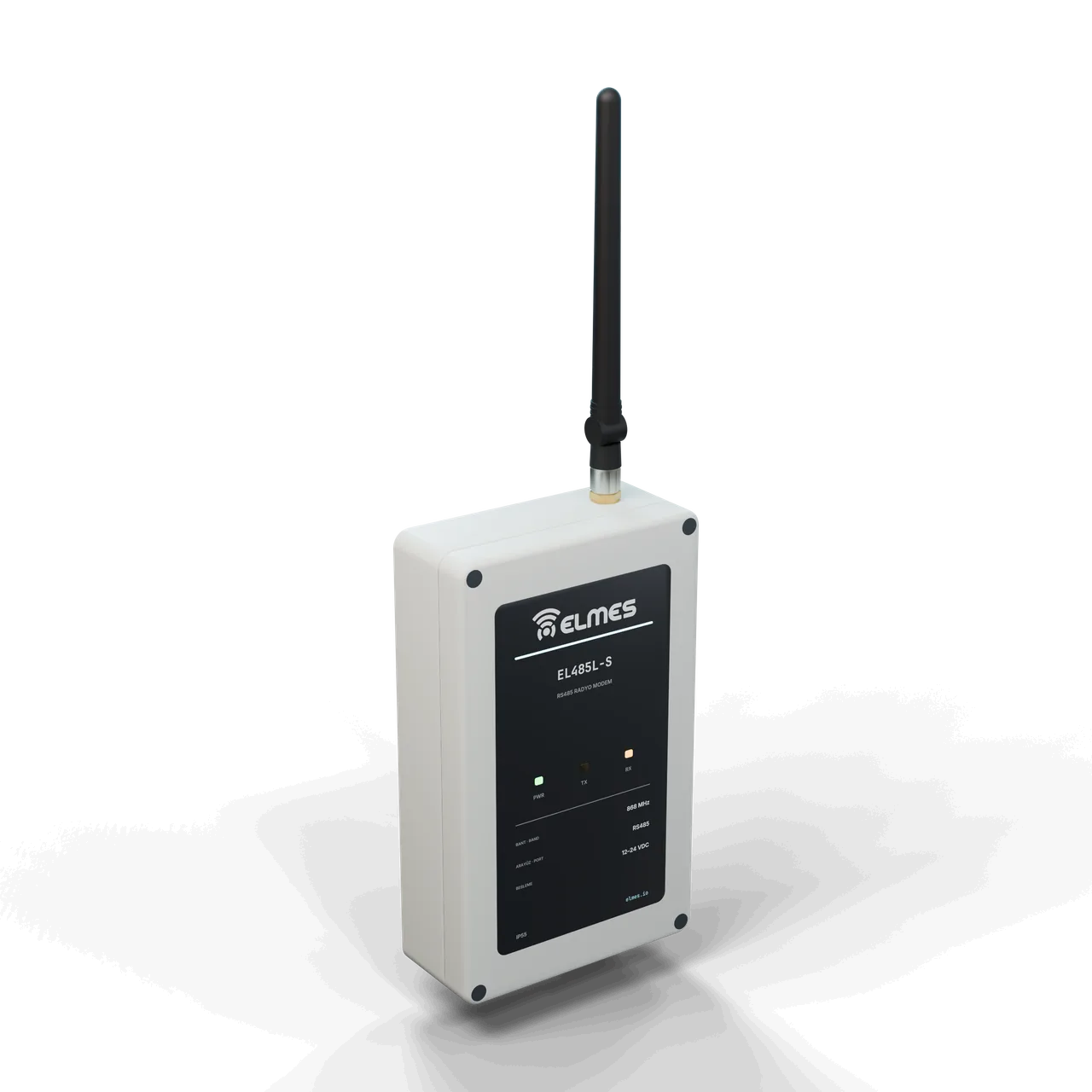
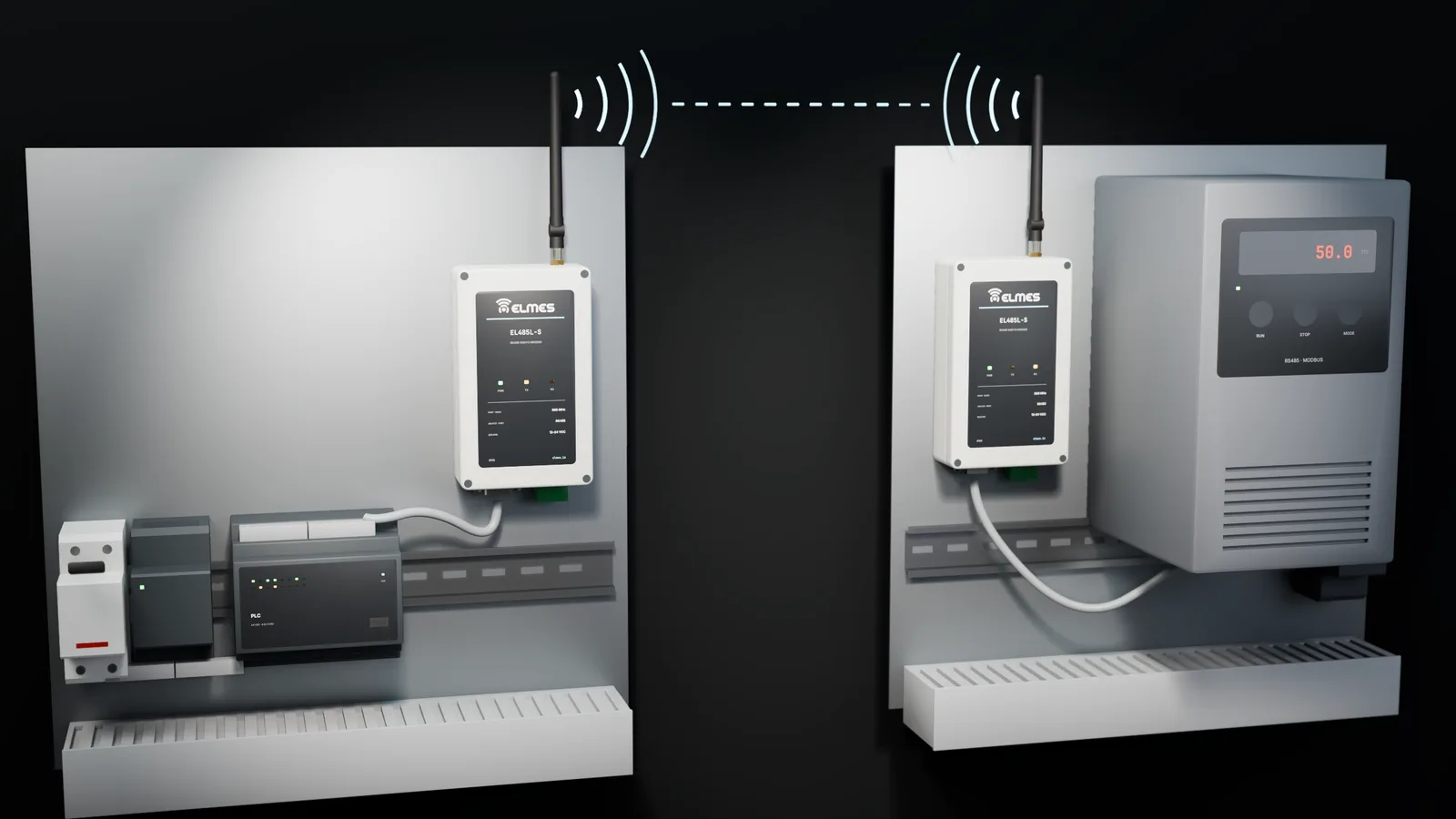
The solution. The wireless RS485 modem is installed at both ends of the RS485 line and carries the serial data transparently over radio. The PLC/SCADA software does not change; the modem looks like a cable. The current EL485L-S links up to 10 km in open field (1200 bps, per the technical datasheet) with 500 mW output power; 40 channels let several links run side by side on the same site. With master/slave firmware, one central station can poll several remote ends (Modbus polling).
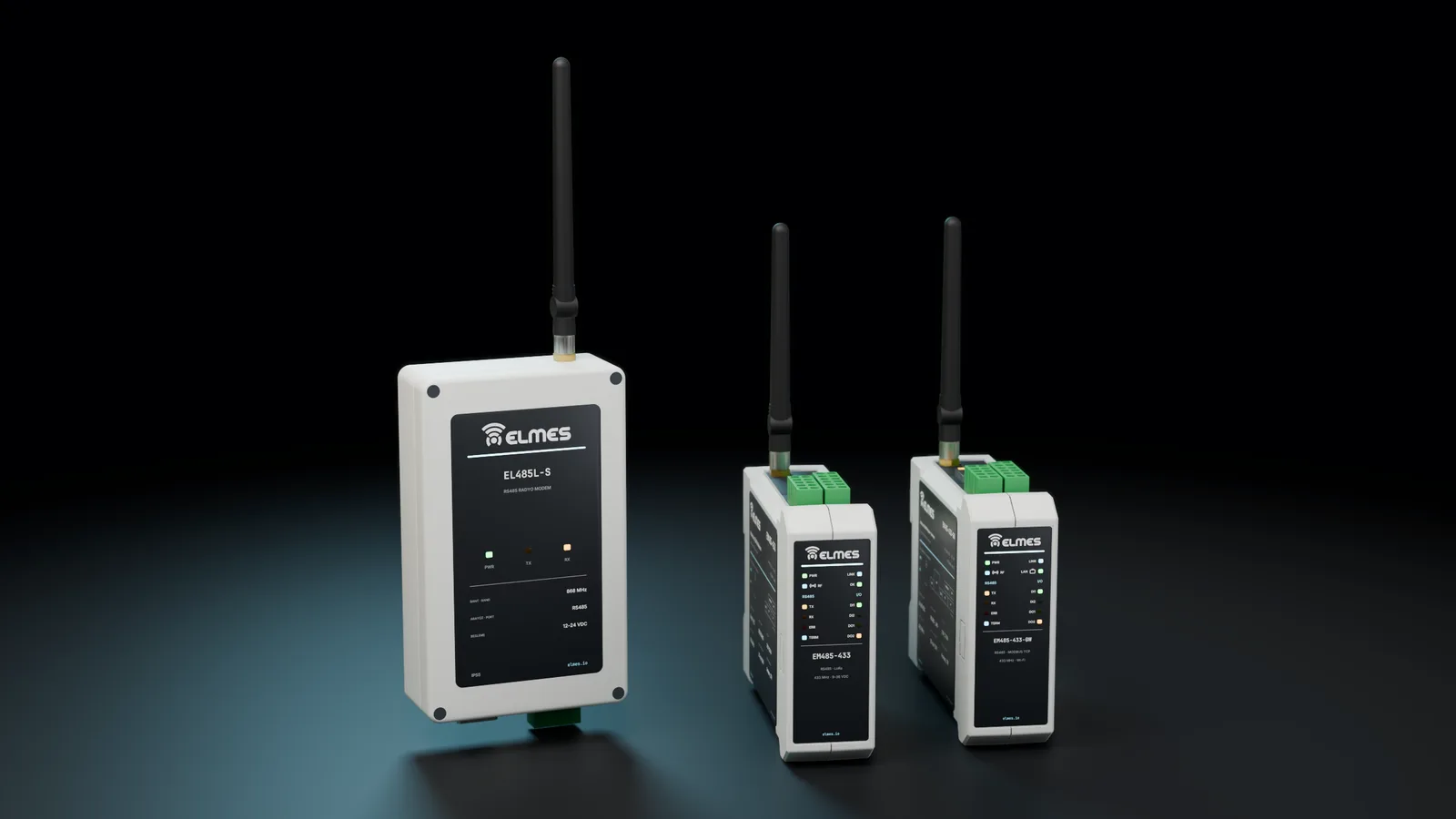
New series. The same function is to be delivered with an EM-G0L-433 or EM-G0L-868 module and the EC-485 carrier board (I/O Carrier Boards): LoRa modulation gives higher sensitivity and interference immunity at low data rates, the RS485 port becomes isolated, and an optional Wi-Fi/Ethernet Modbus TCP bridge (Wireless Gateway / RTU) is offered in the same housing.
Features
- Transparent serial bridge: no drivers or configuration on the PLC/SCADA side; it behaves like an RS485 cable.
- Master/slave firmware: central polling, RF timeout flag; point-to-point or star topology.
- Adjustable power (10–500 mW) and 40 channels: neighboring links on separate channels; lower power at short distances to reduce interference.
- Large packets (500 bytes): long Modbus responses (multi-register reads) in a single RF packet.
- Optional modules: directional antenna kit, DIN-rail power supply, RS232 converter.
- TargetIsolated RS485: 2.5 kV isolation and a termination switch.
- Target"Link OK" relay output and RSSI/SNR indication: link quality via LEDs and the service port.
- TargetModbus RTU address routing: one master, N remote ends; frames are forwarded to the right end by Modbus address.
- TargetRepeater profile: range extension through an intermediate station.
- TargetModbus TCP bridge: with the dual-radio LoRa/Wi-Fi module (EM-G0LW-433).
- TargetOTA updates: remote firmware updates.
Generations and variants
| Model code | Hardware | Band | Interface | Status | Request a quote |
|---|---|---|---|---|---|
| EL485L-S | Si4463 | 868–869 MHz (433–434 MHz option listed in the datasheet) | RS485, D-SUB-9 + KLS4 terminal block | In the field (Mersin, Şanlıurfa) | Request a quote: EL485L-S |
| EL485L-S-M / -S | Si4463 | 869 MHz | Master / slave firmware | In the field | Request a quote: EL485L-S-M / -S |
| EM485-868Target | New series: EM-G0L-868 + EC-485 | 868 MHz (SX1262) | Isolated RS485 + optional RS232 | Planned | Request a quote: EM485-868 |
| EM485-433Target | New series: EM-G0L-433 + EC-485 | 433 MHz (SX1268) | Isolated RS485 | Planned | Request a quote: EM485-433 |
| EM485-433-GWTarget | New series: EM-G0LW-433 + EC-485 | 433 MHz + Wi-Fi | RS485 + Modbus TCP bridge | Planned (shared with the gateway) | Request a quote: EM485-433-GW |
Specifications
Values marked “Target” are design targets, next-generation values or chip-vendor data; they are updated as measurement and certification are completed.
| Frequency band (EL485L-S) | 868–869 MHz ISM (the datasheet also lists a 433–434 MHz option) |
|---|---|
| Frequency band (new series) | 868 MHz (SX1262) or 433 MHz (SX1268) versionTarget |
| Channels (EL485L-S) | 40, selectable |
| Channels (new series) | 8 (433 MHz plan)Target |
| Output power (EL485L-S) | 500 mW (27 dBm); adjustable 10–500 mW |
| Output power (new series) | +22 dBm; ETSI 14 dBm ERP limit at 868 MHzTarget |
| Receiver sensitivity (EL485L-S) | −126 dBm |
| Receiver sensitivity (new series) | −129 dBm @ SF11 (chip datasheet)Target |
| Modulation (EL485L-S) | (G)FSK (Si4463) |
| Modulation (new series) | LoRa SF7–SF12Target |
| RF data rate (EL485L-S) | 0.6–300 kbps |
| RF data rate (new series) | 0.3–62.5 kbps (LoRa)Target |
| Antenna connector (new series) | SMA female, 50 ΩTarget |
| Open field (EL485L-S) | Up to 10,000 m @ 1200 bps (datasheet claim; line of sight) |
|---|---|
| Open field (new series) | ≥ 5 km @ SF10, 2 dBi antenna, 3 m heightTarget |
| Industrial / indoors (new series) | ≥ 300 mTarget |
| Coding (EL485L-S) | CRC-16 (ITU), address / channel; no encryption |
|---|---|
| Encryption (new series) | AES-128-CCM; NetID + 16-bit addressTarget |
| Links on the same site (EL485L-S) | 40 channels; each link on its own channel |
| Systems on the same site (new series) | ≥ 8 independent networks via channel × NetIDTarget |
| Latency (EL485L-S) | Depends on baud rate and packetization |
|---|---|
| Latency (new series) | < 100 ms @ SF7, short packetTarget |
| On communication loss (EL485L-S) | Through the PLC's Modbus timeout; the PLC/RTU logic defines the safe state |
| "Link OK" output (new series) | Relay output, 1–60 s adjustableTarget |
| Watchdog (EL485L-S) | Microcontroller WDT (PIC) |
| Watchdog (new series) | Independent hardware watchdog (IWDG)Target |
| Supply (EL485L-S) | 12–24 VDC |
|---|---|
| Supply (new series) | 9–36 VDC; reverse-polarity + TVS protectionTarget |
| Consumption (new series) | ~118 mA @ 3.3 V while transmitting (module) + carrier boardTarget |
| Serial interface (EL485L-S) | RS485 (D-SUB-9 + KLS4 terminal block); 1.2–115.2 kbps selectable; packet ≤ 500 bytes |
|---|---|
| Serial interface (new series) | Isolated RS485, 115.2 kbps + optional RS232; 2× DI, 2× DO (EC-485)Target |
| Protocol (EL485L-S) | Transparent serial; works with Modbus RTU |
| Protocol (new series) | Transparent + Modbus RTU address routing (address → remote end) + Modbus TCP (GW version)Target |
| Housing (EL485L-S) | 83 × 137 × 34 mm, IP55 |
|---|---|
| Housing (new series) | DIN-rail housing, 2 modules (36 mm); IP20 (inside a panel)Target |
| Mounting (EL485L-S) | Wall / panel (box) |
| Mounting (new series) | 35 mm DIN railTarget |
| Operating temperature (EL485L-S) | −40…+85 °C |
| Operating temperature (new series) | −25…+70 °C (terminal / relay limit)Target |
| Humidity (new series) | 5–95 %, non-condensingTarget |
| Warranty / spare parts | 2-year manufacturer warranty; 15-year parts availability; made in Ankara |
|---|
Applications
- Water and sewage utilities
- Well–reservoir–pump stations
- Transformer substations
- Solar / wind farms
- Silo, weighing and kiln lines
- Distributed meters in industrial zones
- Irrigation pumps and valves
- OEM RS485 devices
- Water and sewage utilities: RTU links between wells, reservoirs and pump stations; for the SCADA side see SCADA & Industrial Automation.
- Energy: analyzer reading at transformer substations and solar/wind farms.
- Industry: extending silo, weighing, kiln and drive lines; distributed meters within industrial zones.
- Agriculture: connecting irrigation pump and valve controllers to the control center (Wireless Irrigation Control System).
- OEM: the Elmes Module Series for manufacturers who want to make their own RS485 devices wireless.
The EL485L-S was deployed in 2018 in Mersin and Şanlıurfa for SCADA/RTU links. Antenna height is decisive for range; long links use directional antennas (Industrial RF Antenna Series).
Compliance & documentation
For the current EL485L-S, the manufacturer's technical datasheet contains a regulatory declaration; there is no accredited test report. Documentation for the new series is being prepared step by step according to the plan below, starting at module level.
- Self-declaredTurkish Radio and Telecommunications Terminal Equipment (Class 2) Regulation — EL485L-SManufacturer's declaration in the technical datasheet
- TargetCE – RED 2014/53/EU (EN 300 220-2, EN 301 489-1/-3, EN 62368-1) — new seriesStep by step, starting at module level
- TargetBTK (Turkish ICT Authority) application — new seriesSeparate applications for 433 MHz and 868 MHz
- TargetRoHS declaration
- TargetCE declaration of conformity and user manual
Frequently asked questions
Do I need to change the software in my PLC?
No. The modem is a transparent serial bridge; we only recommend increasing the Modbus timeout to allow for the RF delay.
How many links can run on the same site without interfering?
The current EL485L-S has 40 channels and each link is put on its own channel. The new generation targets at least 8 independent networks through channel and network ID (NetID).
Is the range really 10 km?
The 10 km figure in the datasheet applies to open field, line of sight and 1200 bps. Indoors and over obstructed terrain it is much shorter. Range is increased with antenna height and directional antennas (Yagi / J-pole).
Can I connect one master to several RTUs?
Yes; the master/slave firmware runs in a star topology. The RTUs must have different Modbus addresses.
What happens if the RF link is lost?
No data reaches the serial port and the PLC raises a Modbus timeout; the PLC/RTU logic defines the safe state. The new generation adds a "link OK" output that can be wired to a panel alarm.
Is a frequency license or subscription required?
No. The modem works in the 433/868 MHz ISM band within legal limits according to its datasheet and needs no frequency license. There is no subscription.
Do the current EL485L-S and the new-generation modem work together?
No; they use different modulation (FSK vs. LoRa). Both generations can run side by side on the same site as separate links.
What about warranty and service?
2-year manufacturer warranty and 15-year parts availability. Service is in Ankara; the new generation targets remote OTA updates.
Get a quote for this product
Our engineering team replies within 24 hours.
Related products
 Coming soonModules, Boards & Gateways
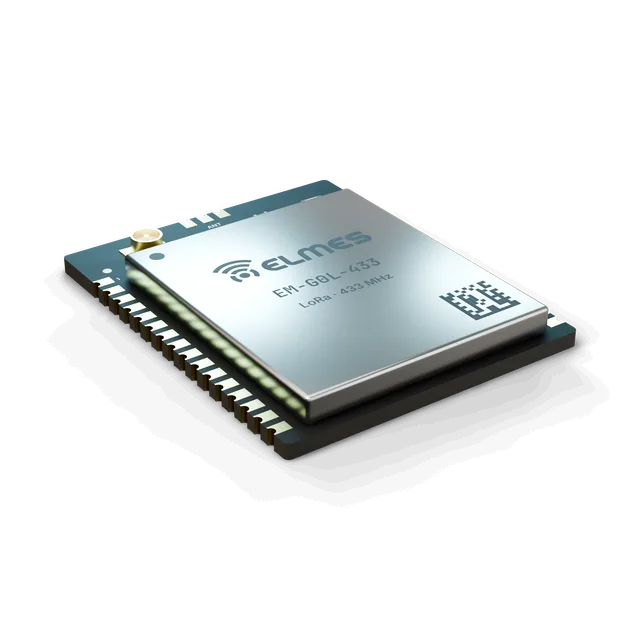
STM32 + SX1268 LoRa Module (EM-G0L-433)
A field-proven LoRa path in a castellated module.
View details: STM32 + SX1268 LoRa Module (EM-G0L-433)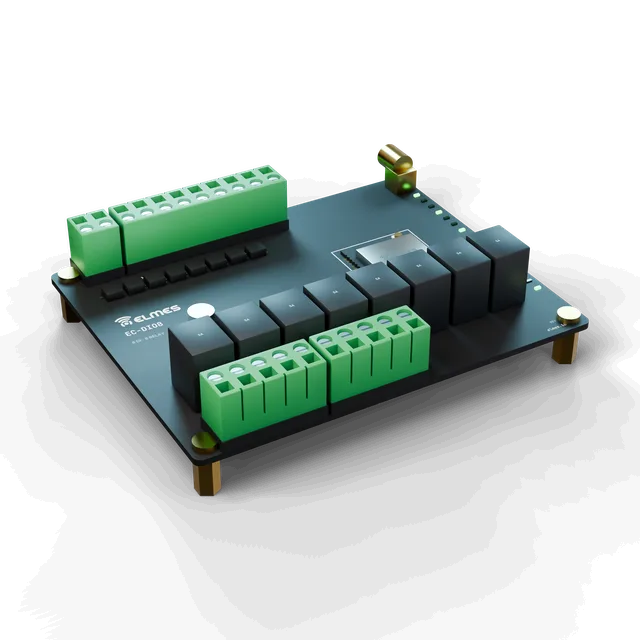 Coming soonModules, Boards & Gateways
I/O Carrier Boards (EC)
Plug in the module, wire the terminals — your wireless I/O box is ready.
View details: I/O Carrier Boards (EC)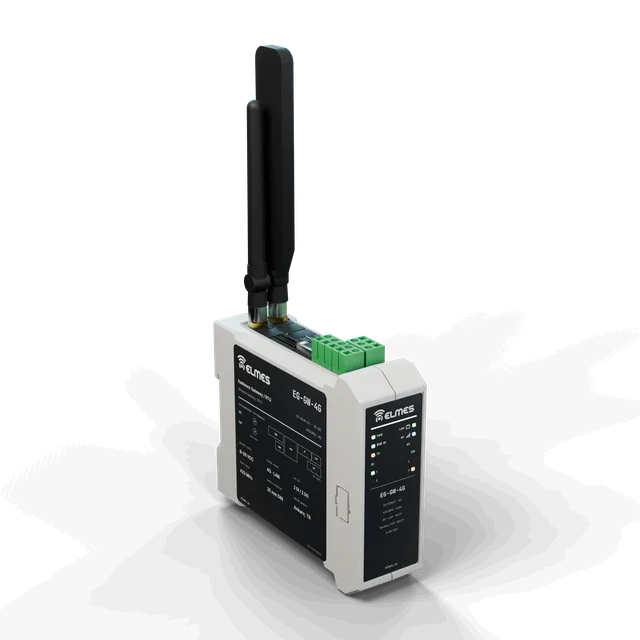 Coming soonModules, Boards & Gateways
Wireless Gateway / RTU
Connect every LoRa node in the field to SCADA, the cloud and PLCs with a single box.
View details: Wireless Gateway / RTU